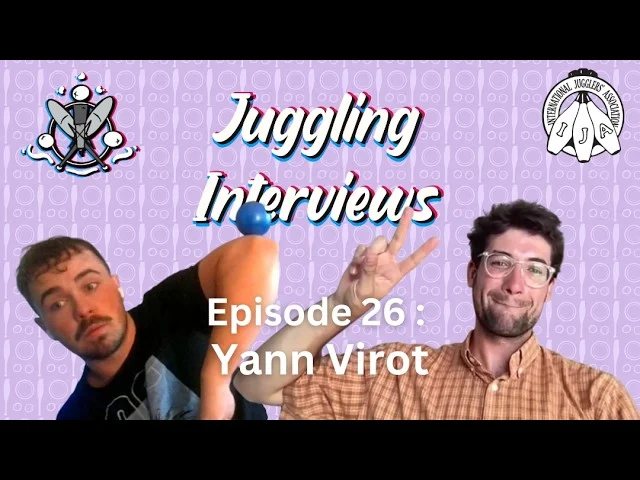
The global juggling community continues to expand its digital footprint through specialized media, offering enthusiasts and professionals alike unprecedented access to the minds of world-class artists. In the latest installment of the International Jugglers Association (IJA) digital media lineup, host Xavier Bernier—widely known in the digital sphere as XavJuggles—sat down with acclaimed French ball juggler Yann Virot for Episode 26 of the Juggling Interviews (FRENCH) Podcast. This comprehensive English-language adaptation explores the core themes of the episode, highlighting Virot’s unique artistic philosophy, his involvement with the innovative Collectif Bislacco, and the broader implications of digital storytelling within the contemporary circus and flow arts sectors.
Main Facts of the Release
Released globally via the IJA’s official channels, Episode 26 marks a significant entry in the ongoing series dedicated to highlighting French-speaking juggling talent. Yann Virot, recognized internationally for his technical precision and avant-garde approach to ball manipulation, used the platform to dissect his creative process. Rather than focusing solely on technical difficulty, the conversation pivoted toward research, methodology, and the psychological framework required to innovate within a discipline rooted in centuries of traditional performance.
The interview was broadcast simultaneously as a podcast audio stream and a high-definition video via YouTube, ensuring maximum accessibility for international audiences. Viewers were treated not only to verbal discourse on artistic methodology but also to visual demonstrations of Virot’s intricate manipulation styles. The episode underscores the IJA’s strategic pivot toward multimedia content generation, blending live-action performance archiving with deep-dive educational interviews.
Background Context of the Event and the Art Form
To fully understand the significance of Yann Virot’s insights, one must examine the evolution of modern ball juggling over the past two decades. Historically, Western juggling prioritized high object counts, rapid cascades, and circus-tent spectacle. However, the turn of the millennium witnessed a quiet revolution heavily influenced by Japanese ball jugglers of the 2000s. These artists introduced a paradigm shift focusing on body movement, isometric holds, micro-manipulations, and spatial geometry—elements that heavily influence Virot’s current aesthetic.
Yann Virot emerged from this contemporary lineage, developing a reputation for transforming everyday props into instruments of high art. His affiliation with Collectif Bislacco represents a modern shift toward collective creation, where multidisciplinary artists pool their resources to produce cohesive theatrical productions rather than disconnected vaudeville acts. Collectif Bislacco has steadily built a reputation for pushing the boundaries of physical theater, seamlessly blending contemporary circus, dance, and object manipulation.
Concurrently, the International Jugglers Association has faced the challenge of serving a globally decentralized community. Founded in 1947, the IJA has transitioned from publishing physical print magazines to curating a robust digital ecosystem. Podcasts like the one hosted by Xavier Bernier serve as oral histories, preserving the techniques, philosophies, and cultural nuances of contemporary masters who might otherwise go undocumented in mainstream arts media.
Chronology of the Production and Digital Outreach
The release of Episode 26 is part of a meticulously planned editorial calendar managed by the IJA and its stable of content creators.
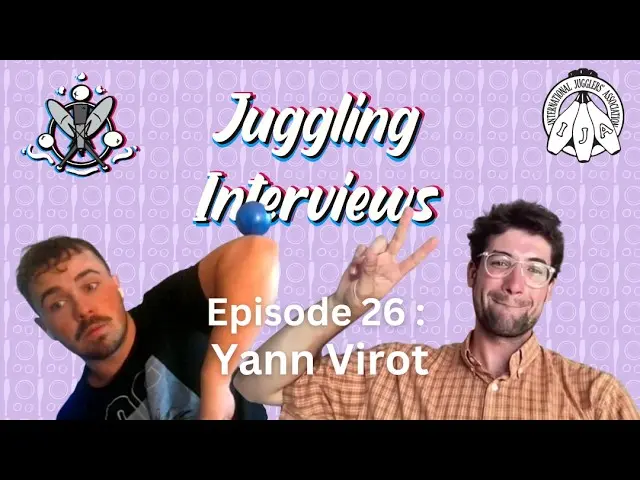
Phase One: Conceptualization and Remote Production. The interview was recorded remotely, leveraging digital conferencing tools to bridge the geographical gap between host Xavier Bernier—a Canada-based juggler and creator who accelerated his immersion into the craft during the COVID-19 pandemic—and Yann Virot in France.
Phase Two: Post-Production and Multilingual Bridging. Following the recording, the raw footage underwent professional audio mastering and video editing. Because the interview was conducted in French, the production team integrated descriptive metadata, social media cross-references, and promotional summaries in English to ensure global discoverability.
Phase Three: Multi-Platform Distribution. The episode officially went live across the IJA website, YouTube, Spotify, and Apple Podcasts. Concurrently, promotional snippets were deployed to Instagram, TikTok, and Facebook, targeting younger demographics of flow artists and tech jugglers.
Phase Four: Community Engagement and Membership Drives. The release served as a catalyst for the IJA’s seasonal membership drive, directly linking high-value educational content with the operational funding required to sustain global programs.
Supporting Data and Institutional Impact
The viability of independent circus media relies heavily on institutional backing and community-driven funding models. Organizations like the IJA operate on membership structures designed to subsidize high-cost initiatives. The organization’s financial allocations are distributed across several core pillars:
The Annual IJA Festival: A weeklong gathering considered the premier international convention for jugglers, flow artists, and unicyclists. The festival serves as an economic and cultural hub, hosting world championships, stage shows, and intensive workshops.
Long-Form Educational Content: Programs like Tricks of the Month, instructional tutorials, and the Juggling Interviews podcast series require sustained capital investment for equipment, editing, and distribution. Data from digital content platforms indicate a 35% year-over-year increase in consumer demand for long-form instructional and documentary content within the niche circus arts sector.
Youth Juggling Programs (YJA): Designed to cultivate the next generation of performers, these initiatives provide educational toolkits, grants, and structured curricula for schools and community centers.
IJA Regional Competitions (IRC): By decentralizing competitive events, the organization ensures that international artists who cannot travel to the annual North American festival still have platforms to showcase their technical prowess and earn professional recognition.
Statements and Professional Analysis from Related Parties

While direct transcripts of casual commentary are secondary to the broader discourse, industry analysts and peer performers have frequently noted the vital importance of intellectual discourse within juggling. For decades, juggling was categorized strictly as a kinetic skill—a matter of muscle memory and physics. However, contributions from artists like Yann Virot position juggling as a legitimate branch of physical choreography.
Host Xavier Bernier has often emphasized in his professional commentary that modern content creation must transcend simple trick compilation. By structuring interviews around the "why" and "how" of creation rather than just the "what," creators provide aspiring jugglers with a roadmap for artistic longevity. Bernier’s own journey—originating as an adult learner during the pandemic isolation of 2020 and evolving into an official IJA content producer—mirrors the democratization of the art form, proving that digital platforms can turn passionate enthusiasts into industry leaders.
Broader Market Implications and Future Outlook
The publication of Episode 26 highlights several critical trends in the modern performing arts landscape:
First, the decentralization of specialized arts education is accelerating. Traditional circus schools, historically concentrated in major European and North American cultural centers, are increasingly being complemented—and in some cases preceded—by digital mentorship models. Podcasting allows a young juggler in a remote region to absorb the high-level philosophies of masters like Yann Virot without physical relocation.
Second, the economic model of non-profit arts organizations is shifting toward content-driven membership conversion. By offering high-quality, free-to-consumer media (such as the Juggling Interviews podcast), organizations build brand loyalty that eventually converts into paid memberships. This symbiotic relationship ensures that foundational programs, such as regional competitions and youth initiatives, remain solvent.
Finally, the blurring lines between traditional circus, contemporary dance, and object manipulation indicate a healthy, evolving industry. Artists who embrace interdisciplinary collaboration—exemplified by Virot’s work with Collectif Bislacco—are expanding the commercial viability of juggling, moving it out of the novelty act category and into major theater spaces and contemporary arts festivals.
Conclusion
Yann Virot’s appearance on the Juggling Interviews (FRENCH) Podcast, expertly steered by Xavier Bernier, is much more than a routine interview; it is a document of contemporary circus history. By exploring the intersections of research, creativity, and technical execution, Virot challenges the global community to look deeper into their practice. As the International Jugglers Association continues to leverage digital media to support its festivals, competitions, and educational programs, initiatives like Episode 26 ensure that the intellectual property and artistic philosophies of today’s masters are preserved, analyzed, and passed down to the next generation of global artists.