The world of professional juggling recently witnessed a significant archival milestone as a substantial collection of previously unseen photographs documenting the career of the late Angelo Piccinelli was brought to light. Piccinelli, an Italian virtuoso born in Brussels in 1921, occupied a singular position in the mid-20th-century variety circuit. His death in 2023 marked the end of an era for a specific generation of European performers whose technical innovations laid the groundwork for modern object manipulation. Through the diligent preservation efforts of historians and collectors like Shay Wapniaz and Scott Cain, the public and the juggling community are now granted a deeper view into the life and artistry of a man who influenced some of the greatest names in the history of the craft.

The Formative Years and Technical Innovation
Angelo Piccinelli’s entry into the professional sphere occurred at a time when the aesthetic of juggling was undergoing a rigorous transformation. Born in 1921, he emerged as a prodigy in an era where technical dexterity was being pushed to its absolute limits. By the age of 19, he had already mastered the art of manipulating eight rings—a feat that placed him at the vanguard of the discipline.

Historically, juggling in the early 20th century was transitioning from the rough-and-tumble environment of traveling circuses to the more polished, sophisticated settings of European music halls, nightclubs, and vaudeville theaters. Piccinelli navigated this shift with ease. Unlike many of his contemporaries who relied on traditional comedic tropes or circus tropes, Piccinelli adopted a style that prioritized elegance and extreme physical control. He was among the first performers to integrate modern-style rings into a high-speed, high-stakes repertoire, effectively bridging the gap between classical manipulation and the high-performance standards of the late 20th century.

The Brunn Connection and the Evolution of the Finish
Perhaps the most significant legacy left by Piccinelli is his influence on the legendary Francis Brunn. Brunn, widely regarded as one of the most important figures in the history of the art form, frequently cited Piccinelli as his earliest inspiration. The historical significance of this relationship cannot be overstated.

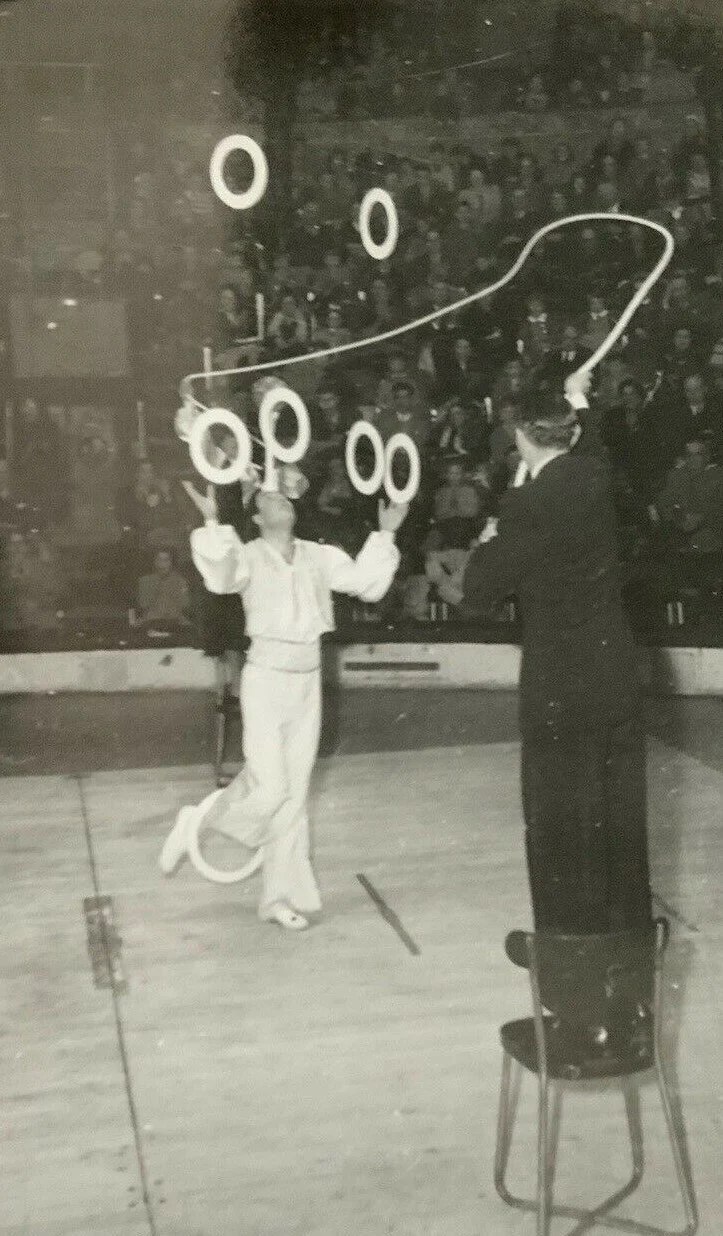
Piccinelli developed a signature, multi-layered combination trick that challenged the spatial awareness and coordination of even the most skilled performers. This routine involved juggling three rings with one hand while simultaneously spinning a ball on a finger of the opposite hand, spinning a ring on one leg, and balancing a ball on a mouth stick—all while maintaining a head pedestal with an additional ball.

Brunn studied this sequence, recognizing both the immense technical difficulty and the inherent dramatic tension it created for an audience. Brunn took these foundational elements and modified them, adding complex, high-speed ring spins and refined choreography to create what is now globally recognized in the industry as the "Brunn Finish." This specific sequence remains a gold standard for technical proficiency, and its existence is directly tied to the foundational work performed by Piccinelli decades earlier.

Chronology of a Career: From Brussels to the Global Stage
- 1921: Angelo Piccinelli is born in Brussels, Belgium.
- 1940: At age 19, Piccinelli gains notoriety for his mastery of eight-ring juggling, cementing his reputation as a technical innovator.
- 1940s–1960s: The peak of Piccinelli’s career. He transitions away from the traditional circus tent to become a fixture in prestigious European variety theaters and elite nightclubs.
- 1963: A milestone year marked by a filmed performance that captures the technical grace of his mature style, serving as a primary source for modern historians.
- Late 20th Century: Piccinelli transitions into retirement, though his influence persists through the students and peers who witnessed his live performances.
- 2023: Angelo Piccinelli passes away, prompting a retrospective on his life and the archival of his personal effects.
- 2024: The surfacing of new, previously private photographs provides a comprehensive visual record of his career trajectory.
The Cultural Impact and Socio-Political Context
Piccinelli’s performance career was intrinsically linked to the cultural landscape of mid-century Europe. In the post-war era, the "variety" format flourished as a form of high-brow entertainment for the social and political elite. Piccinelli was not merely a street performer; he was a fixture in the nightlife of major European capitals, catering to royalty, heads of state, and international celebrities.

His rare appearances in the circus world were intentional. By performing in nightclubs and concert halls, he elevated the status of the juggler from a sideshow act to a solo headlining artist. This shift helped legitimize juggling as a respected discipline within the performing arts. His success was, in many ways, a testament to the European appetite for technical mastery and visual spectacle during the mid-1900s.

Archival Efforts and the Rediscovery of Visual History
The recent release of the new image collection is the result of collaborative efforts between historians and private collectors. Shay Wapniaz and Scott Cain, who spearheaded the recovery of these assets, have highlighted the importance of preserving the "ephemeral" nature of the performing arts.

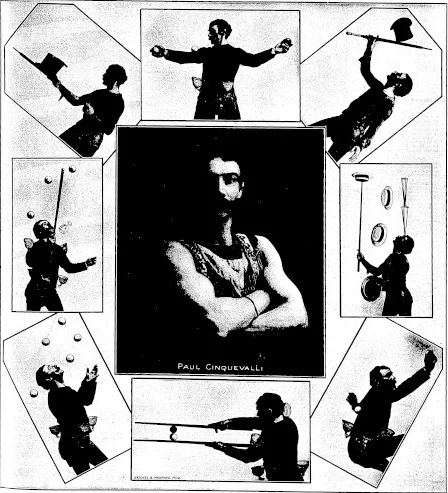
The collection includes candid behind-the-scenes shots, studio headshots, and performance documentation that tracks Piccinelli from his early, leaner days to his more mature, established presence on stage. These images are essential for historians because they provide visual data on equipment evolution—showing the specific types of rings, balls, and balancing apparatuses used in the 1940s and 50s. The photographic evidence complements the 1963 video footage, creating a holistic picture of how Piccinelli adjusted his movements and pacing as his career progressed.

Implications for Modern Juggling Historiography
The formal study of juggling history—often referred to as "juggling historiography"—is a niche but vital field. For researchers like David Cain, the director of the Museum of Juggling History, the recovery of these photographs is not merely an act of nostalgia; it is an act of data preservation.

The implication of such discoveries is the correction of the historical narrative. Before these photos surfaced, the details of Piccinelli’s specific equipment and the exact nature of his routine were often subject to the limitations of oral history, which can be prone to distortion over time. With photographic evidence, the community can now analyze the biomechanics of his tricks with greater accuracy. This allows modern jugglers to better understand the evolution of the "Brunn Finish" and other fundamental techniques that underpin contemporary performance.

Furthermore, the documentation of his career serves as a case study in the longevity of performers. By studying the life of someone who lived over a century, the community gains insight into how to maintain physical health and artistic relevance across a rapidly changing social landscape.

Conclusion: A Living Legacy
As the juggling community continues to process the newly surfaced archive, the legacy of Angelo Piccinelli stands as a pillar of excellence. He was a performer who understood that the beauty of juggling resided not just in the objects themselves, but in the tension, rhythm, and discipline of the performer.

For the contemporary enthusiast, Piccinelli’s story is a reminder of the importance of maintaining an unbroken line between the innovators of the past and the creators of the present. Through the continued efforts of historians to digitize and preserve these records, the "lost" history of vaudeville and variety theater remains accessible, ensuring that the next generation of performers understands the shoulders upon which they stand.

Those interested in the primary records of this era are encouraged to consult the ongoing research led by the Museum of Juggling History. As more photographs and anecdotal evidence emerge, the narrative surrounding Piccinelli will undoubtedly continue to evolve, reinforcing his status as an indispensable figure in the annals of performing arts history. The preservation of his life’s work serves as a testament to the enduring power of skill, dedication, and the pursuit of perfection in one of humanity’s oldest and most captivating art forms.