The mid-1960s occupy a singularly distinct space in the broader history of popular music, characterized by rapid stylistic evolution, generational shifts in songwriting, and a commercial boom that permanently transformed the global recording industry. Few single years within that decade match the creative density and cultural impact of 1965. It was a twelve-month period that bridged the initial shock of the British Invasion with the burgeoning American folk-rock movement and the nascent sounds of psychedelia. Amidst a crowded landscape of shifting musical tides, three specific releases from that year—Gary Lewis & The Playboys’ “This Diamond Ring,” The Beatles’ “Eight Days A Week,” and The Lovin’ Spoonful’s “Do You Believe In Magic”—captured the public imagination, dominated the airwaves, and continue to serve as touchstones of an era.
Examining the trajectory of these three songs reveals not only the mechanics of their commercial success, but also the broader industry ecosystems that allowed college bands, British megastars, and New York folk-rockers to thrive side-by-side on the Billboard charts.
The Cultural and Commercial Landscape of 1965
To understand the weight of these 1965 releases, one must contextualize the state of the music industry at the midpoint of the decade. By 1965, the shockwaves generated by The Beatles’ arrival in the United States in early 1964 had thoroughly destabilized the traditional American pop establishment. Record labels were scrambling to sign young, guitar-driven acts, while established Brill Building writers and independent producers sought out fresh formulas to capture the youth demographic.
The singles market was fiercely competitive. Radio playlists were tightly curated, and the battle for the coveted number-one spot on the Billboard Hot 100 was relentless. In this high-stakes environment, songs were not merely pieces of entertainment; they were multi-million-dollar commodities backed by aggressive promotional strategies, television appearances on programs like The Ed Sullivan Show and Hullabaloo, and heavy rotation on AM radio stations across the country.
The year 1965 stood out because it forced a dialogue between opposing musical philosophies. On one side were manufactured or semi-independent pop groups relying on top-tier professional songwriters; on the other were self-contained songwriting units and peerless British innovators redefining the limits of the recording studio.
Gary Lewis & The Playboys and the Ascent of “This Diamond Ring”
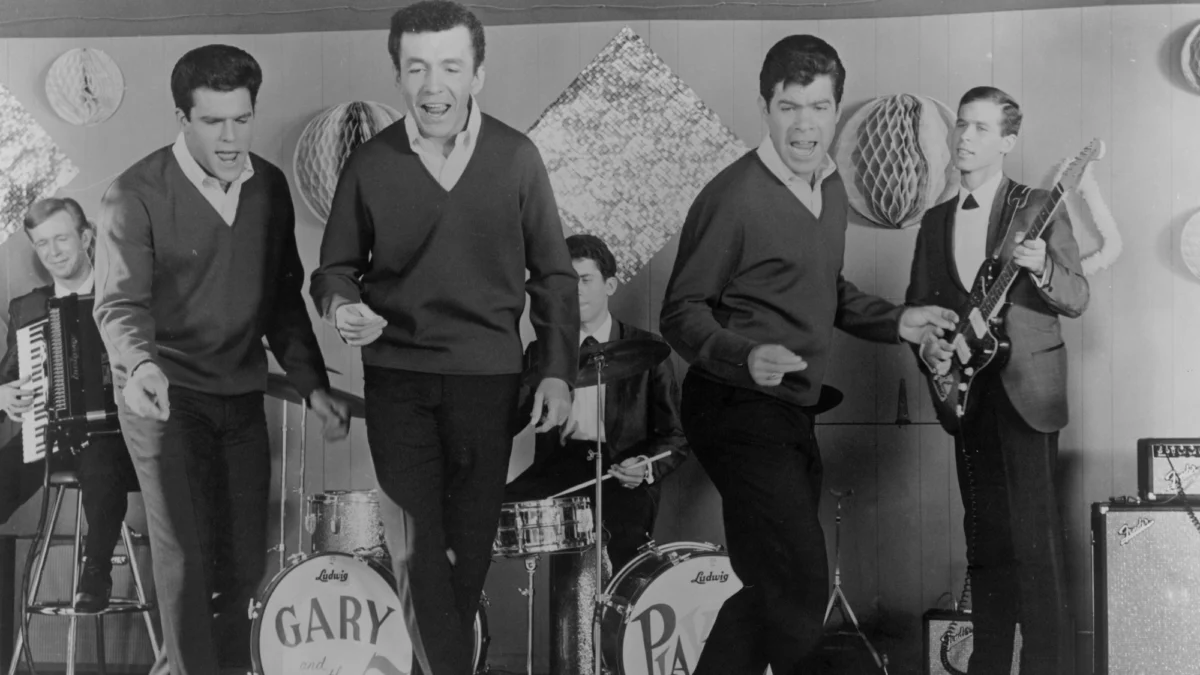
Few commercial ascents in the mid-sixties were as swift or unexpected as that of Gary Lewis & The Playboys. Formed while its members were still college students, the group was playing local gigs in Southern California under relative obscurity before crossing paths with producer Snuff Garrett and master songwriter/session musician Al Kooper.
“This Diamond Ring,” composed by the formidable songwriting trio of Al Kooper, Bob Brass, and Irwin Levine, was chosen as the lead single and title track for the group’s debut studio album. Musically, the track relies on a driving pop beat, accessible vocal harmonies, and a melancholic lyrical core that belied its upbeat tempo. Beneath its bright, radio-friendly exterior, the song tells a starkly sorrowful tale of heartbreak and romantic disillusionment. The lyrics capture the painful realization of a relationship’s end: “This diamond ring doesn’t shine for me anymore / And this diamond ring doesn’t mean what it did before / So if you’ve got someone whose love is true / Let it shine for you.”
Despite the band’s amateur status at the time of recording, the track struck an immediate chord with the American public. The single climbed the charts with breathtaking velocity, capturing the number-one position on the Billboard Hot 100 within roughly six weeks of its release. In doing so, it achieved a feat that few rising acts could claim: it temporarily dethroned The Beatles, knocking “Eight Days A Week” out of the top spot.
Reflecting on the unexpected triumph years later, frontman Gary Lewis recounted the disbelief within the band’s ranks to Forbes. “It stunned the hell out of us because it went to No. 1 in like six weeks, and actually kicked ‘Eight Days A Week’ by The Beatles out of No. 1,” Lewis recalled. “That was really something.”
The implications of the track’s success were profound for the band. It transformed college musicians into international pop stars nearly overnight, proving that the era’s appetite for melodic, emotionally resonant pop was insatiable, and demonstrating that lightning could strike for lesser-known acts operating outside the core music capitals of New York and London.
The Beatles and the Unrivaled Reign of “Eight Days A Week”
If Gary Lewis & The Playboys represented the sudden triumph of up-and-coming hopefuls, The Beatles represented absolute cultural dominance. By 1965, John Lennon, Paul McCartney, George Harrison, and Ringo Starr were no longer just a popular touring act; they were a global cultural phenomenon operating at the absolute peak of their creative powers.
“Eight Days A Week,” written by the legendary songwriting partnership of John Lennon and Paul McCartney, was included on the group’s Beatles VI album in North America and originally released on the Beatles for Sale LP in the United Kingdom. Unlike the mournful heartbreak of “This Diamond Ring,” “Eight Days A Week” stands as a jubilant, unvarnished declaration of consuming, relentless affection. The track’s iconic chorus encapsulates the hyperbole of young romance: “Eight days a week / I love you / Eight days a week / Is not enough to show I care.”
The track’s composition process showcased the innovative studio habits the band was beginning to embrace. Famously utilizing a fade-in intro—a relatively novel production technique for pop music at the time—the song grabbed the listener’s attention before the vocals even began.
The year 1965 was exceptionally prolific for The Beatles, serving as a transitional period between their early pop formula and the more experimental, introspective artistry that would define later masterpieces like Rubber Soul and Revolver. Alongside “Eight Days A Week,” the band unleashed a continuous stream of era-defining chart-toppers that same year, including “Ticket To Ride,” “Help!,” “Yesterday,” and “We Can Work It Out.”
Each of these releases expanded the thematic vocabulary of popular music. While “Eight Days A Week” retained the accessible charm of their early touring days, it demonstrated an airtight structural maturity and rhythmic drive that few contemporaries could emulate. The track’s brief tenure at the top of the charts—interrupted briefly by aggressive challengers like Gary Lewis—underscored just how fiercely contested the 1965 charts truly were.
The Lovin’ Spoonful and the Folk-Rock Magic of John Sebastian
While British acts and traditional pop groups battled for AM radio supremacy, the American music scene was undergoing a vital transformation fueled by the folk-rock explosion. Out of the vibrant Greenwich Village and East Coast club circuits emerged The Lovin’ Spoonful, a band that blended the storytelling elements of folk music with the infectious energy of rock and roll and the warmth of jug-band instrumentation.
Fronted by singer, songwriter, and multi-instrumentalist John Sebastian, the group made an immediate commercial and artistic statement with their debut single, “Do You Believe In Magic.” Serving as the title track for their freshman studio album, the song was penned entirely by Sebastian and released in the summer of 1965.
“Do You Believe In Magic” is widely celebrated as one of the definitive feel-good anthems of the decade. Sebastian’s composition constructs a direct philosophical argument for the transformative, healing power of music itself. The song’s memorable lyrics immediately establish this ethos: “Do you believe in magic in a young girl’s heart / How the music can free her whenever it starts? / And it’s magic if the music is groovy / It makes you feel happy like an old-time movie.”
The sonic architecture of the track—featuring autoharp, driving acoustic guitars, and bright vocal harmonies—marked a distinct alternative to the heavily orchestrated pop of the Brill Building and the driving rock of the British Invasion. It established a uniquely American template that influenced the development of folk-rock and sunshine pop for the remainder of the decade.
The legacy of “Do You Believe In Magic” extended far beyond its initial 1965 run. The track demonstrated remarkable cross-generational durability, proving its commercial viability anew thirteen years later when pop singer Shaun Cassidy took a cover version into the Billboard Top 40 in 1978. Within the context of The Lovin’ Spoonful’s discography, the song remains their signature composition, anchoring a debut album that cemented their status as architects of mid-sixties American pop.
Comparative Chronology and Chart Dynamics of 1965
The interplay between these three releases highlights the rapid turnover of the 1965 singles market. To trace their chronologies side-by-side reveals a picture of relentless creative output:
- January – February 1965: Gary Lewis & The Playboys release “This Diamond Ring.” Backed by aggressive radio promotion, the single climbs rapidly, capturing the No. 1 spot on the Billboard Hot 100 and temporarily displacing heavyweight contenders.
- Early 1965: “Eight Days A Week” by The Beatles achieves massive airplay, capturing top chart positions globally and solidifying the group’s North American dominance ahead of their Beatles VI LP release.
- Summer 1965: The Lovin’ Spoonful release “Do You Believe In Magic,” introducing John Sebastian’s distinctive songwriting voice to the national stage and launching a string of successful American folk-rock hits.
- Late 1965 and Beyond: The commercial benchmarks set by these tracks pave the way for deeper stylistic experimentation across the industry, setting a high watermark for studio production and songwriting craftsmanship.
Industry Implications and Long-Term Legacy
The commercial performance and enduring cultural footprint of “This Diamond Ring,” “Eight Days A Week,” and “Do You Believe In Magic” offer a clear window into the structural shifts of the mid-1960s music business.
First, these tracks illustrate the democratization of songwriting credits and production roles. While songs like “This Diamond Ring” relied on the traditional separation between professional writers (Kooper, Brass, Levine) and performing artists (Gary Lewis & The Playboys), tracks like “Eight Days A Week” and “Do You Believe In Magic” reinforced the growing industry expectation that successful modern acts should write their own material, championed by writer-performers like Lennon, McCartney, and Sebastian.
Second, the intense chart competition between these releases—exemplified by Gary Lewis knocking The Beatles from the summit—demonstrated that the mid-sixties audience was remarkably diverse in its tastes. Consumers embraced melancholy pop ballads, high-energy British rock declarations, and sunny folk-rock anthems simultaneously, forcing record executives to diversify their portfolios and invest heavily in emerging regional scenes.
Ultimately, the music of 1965 remains instantly identifiable precisely because it balances technical craftsmanship with raw emotional immediacy. Decades after their initial pressings on vinyl, these three recordings continue to resonate, serving as durable monuments to a pivotal twelve-month period when popular music changed the world.