
The departure of these two theatrical staples marks a significant shift in the New York Off-Broadway landscape, signaling the end of a particularly robust season for revivals at the iconic New World Stages complex. Both productions had become fixtures of the theater district, characterized by their ability to repeatedly extend their engagements in response to sustained audience demand and high ticket velocity. Their simultaneous closure underscores the fluid nature of commercial theater, where even the most successful limited-run revivals eventually reach their natural conclusion.
A Look Back at The 25th Annual Putnam County Spelling Bee
The 25th Annual Putnam County Spelling Bee, the beloved musical comedy by William Finn and Rachel Sheinkin, officially lowered its curtain after a highly successful run of nearly one year. Since its opening on November 16, 2025, the production—which explores the quirky, high-stakes world of middle school competitive spelling—garnered critical acclaim for its heart, humor, and audience-participation elements.
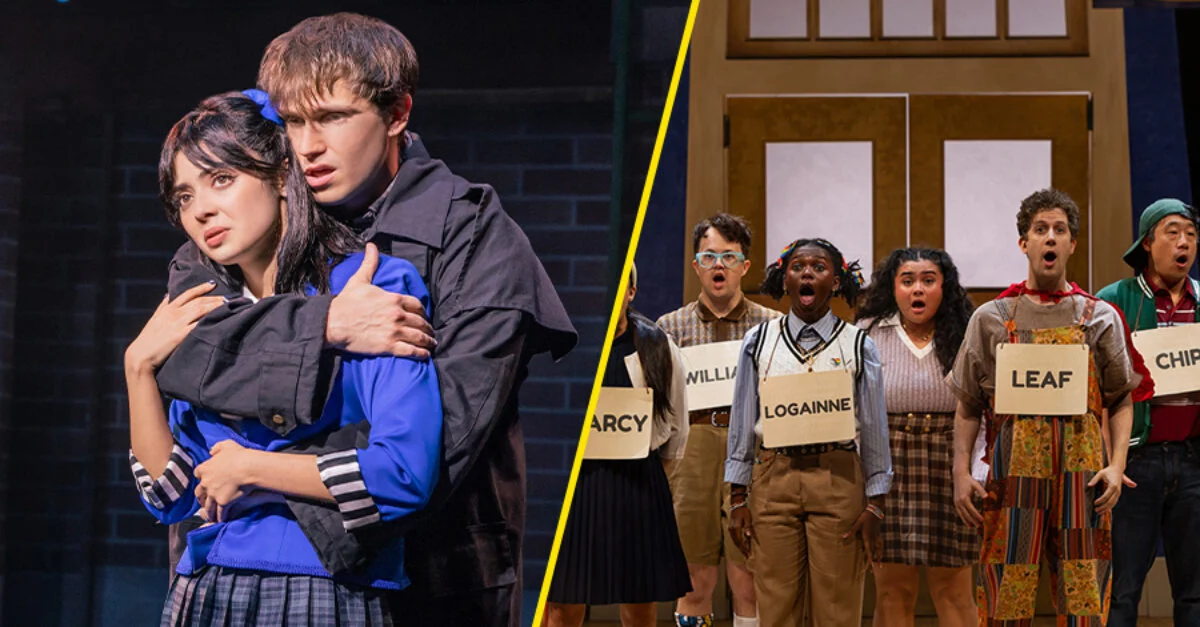
The production’s closing cast was notable for its eclectic blend of seasoned Broadway professionals and cross-disciplinary talent. Led by Jon Cryer as the beleaguered Vice Principal Douglas Panch and Tony Award winner Ali Stroker as the nostalgic Rona Lisa Peretti, the company also featured Olympic gymnast Laurie Hernandez, whose transition into musical theater via this role and her previous work in & Juliet has been closely watched by the industry. The ensemble featured Justin Cooley, Philippe Arroyo, Nina White, Julian Sewell, Leana Rae Concepcion, and Matt Manuel, all of whom brought a distinct energy to the characters of Leaf Coneybear, Chip Tolentino, Olive Ostrovsky, William Barfée, Marcy Park, and Mitch Mahoney, respectively.
Under the direction and choreography of Danny Mefford, the production maintained the intimacy of the original work while scaling it for the New World Stages environment. The musical team, led by music supervisor Carmel Dean and music director Elizabeth Doran, ensured that Finn’s intricate, character-driven score remained the centerpiece of the experience.
The Legacy of the Heathers Revival
Sharing the spotlight in its departure, Heathers The Musical also concluded its run on October 11, following a series of extensions that stretched well beyond its initial limited-run billing. First opening on July 10, 2025, the production served as a homecoming of sorts, returning to the very venue that hosted the original 2014 New York staging.
This iteration of the Laurence O’Keefe and Kevin Murphy musical, based on the 1989 cult classic film, utilized a reimagined staging that originated at London’s The Other Palace. Under the direction of Andy Fickman and featuring choreography by Gary Lloyd and Stephanie Klemons, the production embraced a bolder, more stylized aesthetic that resonated with a new generation of theatergoers.
The cast, which performed its final show on Sunday, was headlined by Isabella Esler as Veronica Sawyer and John Cardoza as the brooding J.D. The production also featured Anneliese van der Pol, whose portrayal of Ms. Fleming added a layer of comedic authority to the show’s darker themes. The supporting cast—including Zan Berube, Ava DeMary, Morgan Dudley, Chris Marsh Clark, Nicholas A. Wilkinson, Aniya Thompson, Jimmy Ray Bennett, and Brian Martin—received praise for their commitment to the show’s dark, satirical tone. Casting, managed by The Telsey Office’s Rachel Hoffman and Jimmy Larkin, played a pivotal role in assembling a group capable of balancing the musical’s high-octane energy with its underlying emotional stakes.
The New World Stages Phenomenon
The closure of these two shows is a notable moment for New World Stages, a venue that has long served as a vital hub for commercial Off-Broadway theater. The venue’s ability to house long-running, high-production-value shows has made it a crucial bridge between smaller, experimental works and massive Broadway transfers.
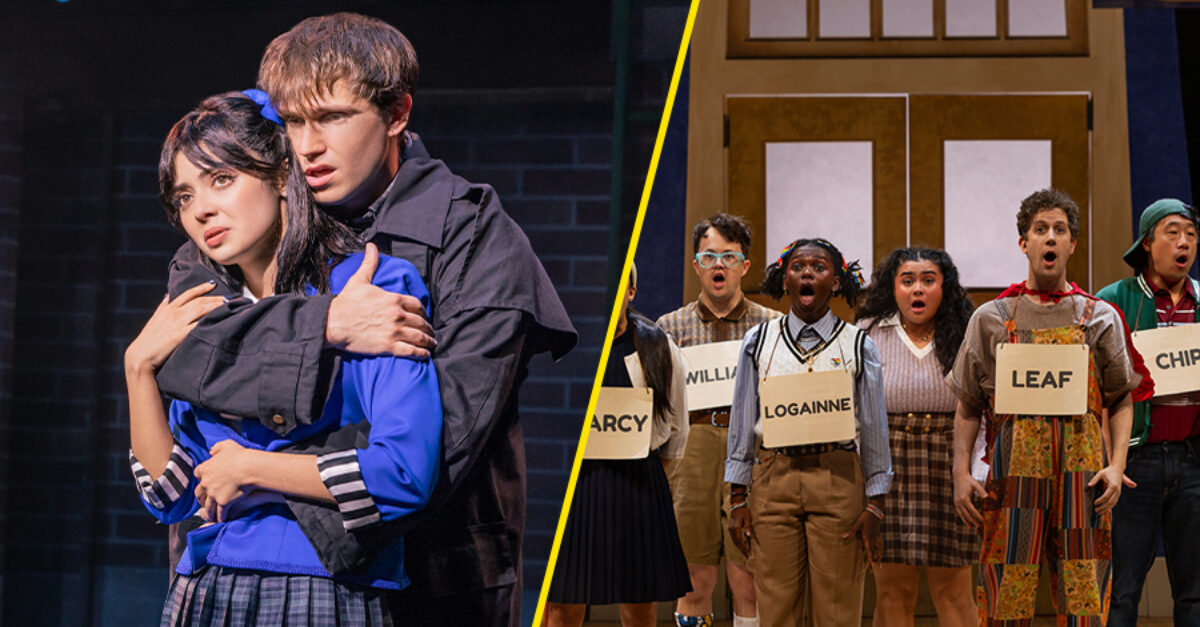
The success of these two revivals serves as a case study in the current theater market’s appetite for "re-discovery." Both Spelling Bee and Heathers benefited from existing fan bases—the former rooted in the nostalgia of the mid-2000s theater boom, and the latter sustained by a massive digital-native following that has kept the property relevant long after its initial premiere. By securing multi-extended runs, the producers demonstrated that there is a clear, repeatable demand for high-quality revivals that can offer a fresh perspective on established material.
Industry Implications and Financial Context
From a business perspective, the conclusion of these runs highlights the logistical complexities of managing Off-Broadway real estate. Running a show at New World Stages requires a delicate balance of operating costs, marketing spend, and the ability to pivot when attendance patterns fluctuate. The "extended run" model is inherently risky; it requires producers to continually invest in advertising to maintain the momentum that allows for those extensions.
Industry analysts note that while these shows were financially successful, their closure represents a broader trend of "seasonal turnover" in New York. As the industry moves further into the late 2020s, producers are increasingly cautious about the longevity of revivals. The data from the 2025-2026 season suggests that while audiences are eager to revisit familiar stories, the window of peak interest for such revivals is often shorter than that of original, breakout hits.
The Artistic Impact of Directorial Vision
A significant factor in the success of both productions was the choice to lean into distinct directorial visions rather than attempting to replicate past iterations. Danny Mefford’s work on Spelling Bee allowed the show to feel fresh and immediate, particularly through the casting of high-profile performers who brought their own individual brand identities to the roles. Similarly, the decision to import the "London staging" of Heathers provided a unique marketing angle, allowing the production to frame itself not just as a revival, but as a new creative interpretation of the material.
The music teams—Carmel Dean and Elizabeth Doran on the Spelling Bee side, and Will Joy and Josh Knight on the Heathers side—were instrumental in maintaining the sonic integrity of the shows. In the modern era, where cast recordings and social media clips often serve as the primary introduction for younger audiences, the musical direction of a show is arguably as important as the visual spectacle. By keeping the music sharp and the performances consistent, both productions maintained a high standard of quality that encouraged repeat viewings.
Looking Toward the Future
As the sets are struck at New World Stages and the costumes are packed away, the theater community is already looking toward the next slate of productions to occupy these spaces. The void left by Spelling Bee and Heathers is substantial, but in the fast-paced world of New York theater, it also represents an opportunity.
The successful tenure of these two musicals confirms that Off-Broadway remains a vibrant, necessary engine for the theater ecosystem. Whether through the revival of contemporary classics or the development of entirely new works, the ability of these venues to draw crowds is a testament to the enduring power of live performance. While the final bows on October 11 mark the end of these specific chapters, the impact of these productions—on the careers of the actors involved, the development of the stage managers and crew, and the memories of the thousands of audience members who filled the seats—will linger long after the marquee lights are dimmed.
In the coming weeks, attention will likely turn to which productions will fill the vacuum left by these closures. For now, however, the industry acknowledges the hard work of the creative teams, the dedication of the performers, and the unwavering support of the audiences who ensured that these two revivals enjoyed the extended life they so clearly deserved. As New York theater enters the next phase of its 2026-2027 season, the lessons learned from the success of Spelling Bee and Heathers will undoubtedly inform the strategies of producers and artistic directors throughout the city.