
EDITOR’S NOTE: This profile contains mention of death and suicide.
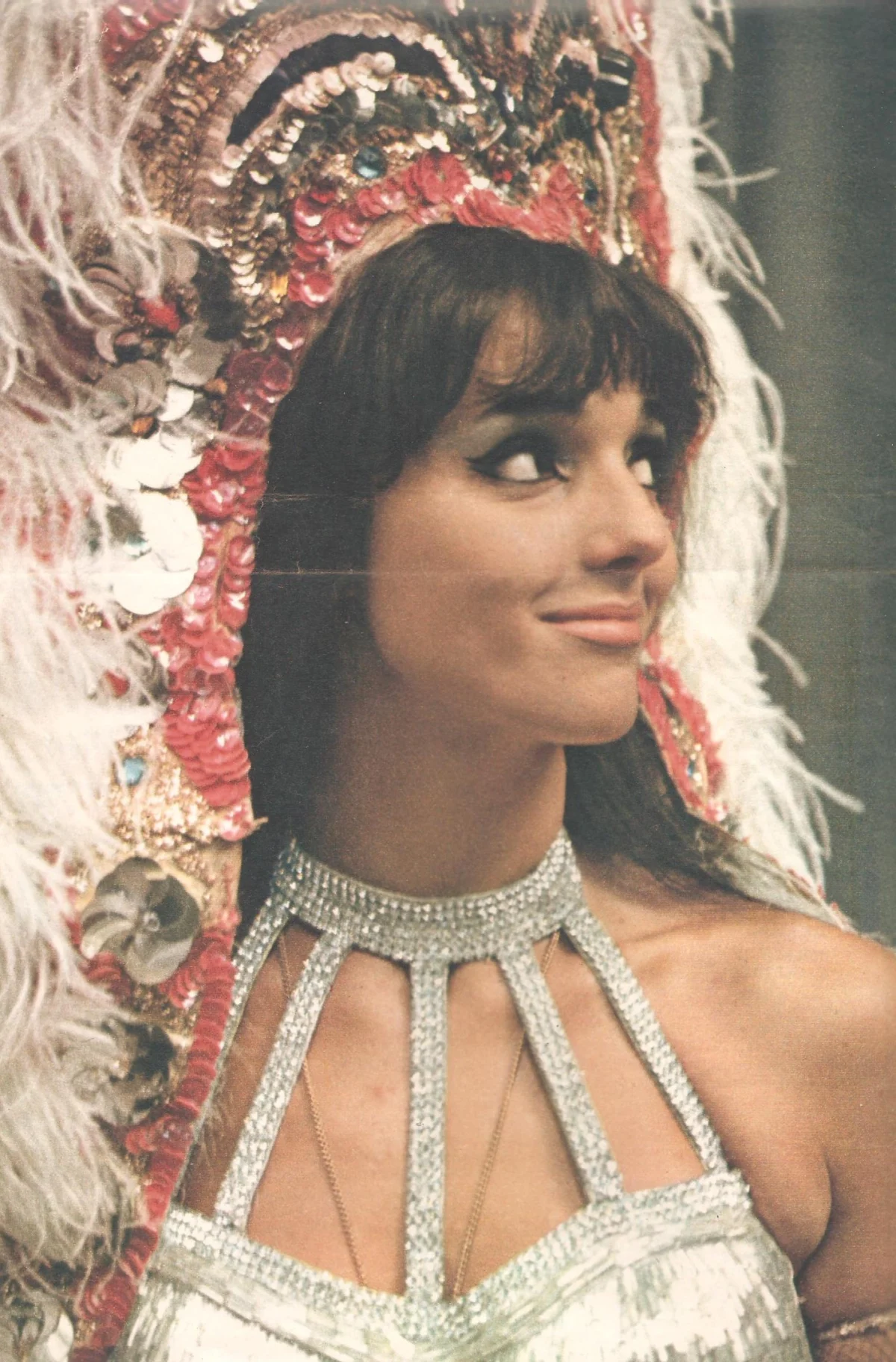
The circus is often romanticized as a world of wonder, laughter, and impossible feats of human endurance. Yet, for those who call the big top their home, it is a realm governed by iron discipline, physical peril, and a profound, often obsessive commitment to the craft. Few stories encapsulate the brutal dichotomy of this life—the glamour of the performance versus the stark reality of the risks—as poignantly as that of Cristiane Bottinelli, the French-born performer who became an icon of the ring under the stage name Yuma.
Born in France, Bottinelli did not follow the path of a multi-generational circus family. Her entry into the industry was a deliberate, late-blooming choice, beginning when she was 17 years old. In an era when circus performers were frequently groomed from early childhood, her decision to master the complex art of juggling in her late teens was an anomaly that required an accelerated, grueling pace of training.

The Apprenticeship of a Performer
Under the mentorship of Amedeo Gerardi, a renowned lion tamer and a polymath of circus techniques, Bottinelli’s transformation into Yuma was systematic. Initially serving as a stage assistant—a role involving the often-thankless logistical support necessary for a seamless production—she spent four years observing the mechanics of the ring before making her own debut as a solo juggler.
Gerardi provided more than just technical instruction; he provided the brand identity. The name "Yuma," chosen by Gerardi, was intended to evoke an exotic, Native American mystique, which was a common marketing trope in mid-20th-century European circus circles. Under his tutelage, Yuma mastered an array of disciplines: balancing on rolling globes, and manipulating a wide variety of props including clubs, rings, balls, swords, and flaming torches.
Her signature act was a feat of high-stakes concentration: she would balance two sharp swords vertically—one resting precariously on the tip of the other—topped by a delicate tray supporting four glasses filled with liquid. The act was a physical manifestation of the precariousness of her own existence, requiring a level of core strength and mental focus that few performers could maintain under the harsh, flickering lights of the ring.
A Timeline of Catastrophe: 1968
The year 1968 proved to be the most transformative and tragic period in Yuma’s life. Within the span of a few months, she was forced to confront the extreme hazards that define the circus profession, losing both her mentor and her husband to freak accidents that underscored the volatility of her chosen path.

On March 19, 1968, the Rancy Circus in Versailles became the site of a fatal occupational hazard. Amedeo Gerardi, the man who had shaped Yuma’s career, was performing in the lion cage when a pedestal—a simple stool designed to support a 240-kilogram lion—tilted. The mechanical failure caused the animal to panic. In the ensuing chaos, the lion attacked Gerardi, inflicting severe injuries to his femur. Despite immediate medical intervention, Gerardi died three days later at the age of 53. The event served as a grim reminder that in the circus, a single failure of equipment or a moment of animal unpredictability could result in a fatal outcome.
Barely had the shock of Gerardi’s death subsided when Yuma faced a second, perhaps more personal tragedy. Having met and married the Italian tightrope walker Daviso Martini earlier that same year, Yuma found herself widowed for the first time just 40 days after their wedding.
The couple was with the Darix Togni Circus, preparing to transition from the town of Savona to Cuneo. The process of dismantling a big top is a high-risk operation, involving heavy rigging and significant heights. While assisting with the teardown, Daviso fell three meters, landing headfirst. He succumbed to his injuries that same night, passing away while Yuma held his hand.
The psychological toll of the evening was further compounded by a secondary tragedy: Daviso’s father, a seasoned veteran of the Italian circus circuit, was so overcome by grief and the perceived failure of the circus to protect his son that he took his own life inside a caravan that same night.

The Philosophy of the Ring
Following these events, Yuma retreated to her parents’ home in Nantes, France. For many, such a concentrated series of losses would have necessitated a permanent departure from the lifestyle that had caused them. Yet, the internal pull of the circus proved stronger than the trauma.
Within months, Yuma returned to the stage, competing in the 5th International Circus Festival for the prestigious Enrico Rastelli Trophy. While the Australian juggler Bob Murray eventually took home the top honor, Yuma’s return was a statement of intent. She was not leaving the ring.
In a candid interview with the Italian newspaper Domenica del Corriere on July 30, 1968, Yuma addressed the public perception of her return to the Togni Circus—the very place where her husband had died. "You can’t leave the circus. It’s impossible," she stated. "You might die, but you don’t walk away from the ring."
She revealed that she had received offers to pivot into film and music, and that she possessed sufficient financial security to retire. Her refusal to do so highlights a specific psychological profile often found in elite performers: the circus is not merely a job or a career, but a totalizing identity. To leave the ring was, for Yuma, a form of erasure.

Analysis: The Circus as a High-Risk Environment
The tragic trajectory of Yuma’s early career highlights significant issues regarding safety standards in the mid-20th-century circus industry. The 1960s were a period of transition, where traditional animal acts and high-wire performances were being pushed to greater extremes to capture the attention of audiences increasingly distracted by television and cinema.
Data from the era suggests that occupational hazards were often treated as "part of the business." The reliance on outdated infrastructure—such as the stool that failed in Gerardi’s act—and the inherently dangerous nature of tasks like manual rig dismantling, meant that performers were often working in environments with minimal regulatory oversight. The "show must go on" mentality, while admirable for its resilience, often prevented the implementation of necessary safety protocols that could have prevented the deaths of both Gerardi and Martini.
Legacy and Broader Implications
Yuma’s life remains a subject of study for circus historians, not only for her technical proficiency as a juggler but for her role as a symbol of the industry’s endurance. Her story forces an examination of the "circus family" dynamic. Unlike the hereditary circus dynasties, Yuma chose this life, which perhaps made her commitment to it even more absolute.
Her decision to return to the Darix Togni Circus, despite the site being the location of her husband’s death, speaks to a complex intersection of grief and purpose. For Yuma, the circus was the only place where she felt the reality of her own existence. She transformed her grief into performance, continuing to work in carnivals and circuses across Europe for years after her 1968 tribulations.

Ultimately, Yuma’s narrative is a testament to the fact that for many performers, the ring is a sanctuary as much as it is a workplace. The risk of injury or death is balanced against the necessity of the performance. By choosing to stay, Yuma maintained her autonomy in a life that had otherwise been dictated by forces outside of her control. Her story serves as a reminder that the history of the circus is written as much in the persistence of its performers as it is in the spectacle of their acts.