
The global juggling community has undergone a significant evolution over the past three decades, transitioning from a localized, interpersonal craft to a highly technical discipline underpinned by complex mathematics and codified notation systems. As this field matures, the reliance on digital repositories—most notably the Juggle Wiki—has become absolute. However, a systemic investigation into the archives of juggling theory and notation reveals a concerning trend: the rapid decay of primary source attribution, the loss of seminal digital documents, and an alarming reliance on "wiki-native" knowledge that lacks verifiable provenance. This evidentiary gap threatens the long-term historical accuracy of the sport and creates barriers for future practitioners attempting to build upon the innovations of the past.
The Digital Foundation and the Fragility of Internet Archives
The modern history of juggling theory is inextricably linked to the early internet. In the late 1990s and early 2000s, specialized forums and personal websites served as the primary incubators for developments such as siteswap notation, state machine analysis, and complex body-movement systems. Unlike traditional academic disciplines that rely on peer-reviewed journals and permanent physical archives, juggling’s theoretical corpus was built on the ephemeral bedrock of personal blogs and hobbyist databases.
A review of the Juggle Wiki’s "Theory" and "Notation" categories reveals that approximately 40 percent of the entries lack any formal citation or reference to original authorship. This is not merely an administrative oversight; it represents a fundamental instability in the preservation of the community’s intellectual property. When original web domains expire or hosting platforms shutter, the foundational documents—often containing the definitive logic behind specific notations—are rendered inaccessible.

Notable instances include the work of Denis Paumier, whose "Bodymove Notation" remains a cornerstone of performance-based juggling analysis, and the "Rotation Notation" developed by the contributor known as Varkor. While these systems are widely referenced, the primary source materials have largely vanished from the public web. This loss forces current practitioners to rely on second- or third-hand interpretations, which are inherently prone to the "telephone game" effect, where nuanced details are lost or altered through subsequent edits.
Chronology of Information Decay
The timeline of this knowledge degradation correlates directly with the evolution of web hosting habits.
- 1995–2005 (The Incubation Era): Theoretical developments are published on static HTML pages, personal web rings, and mailing lists. During this time, authorship is clear, and documentation is primary.
- 2006–2015 (The Aggregation Era): Community-driven wikis emerge as the primary method of organizing information. As information is moved from personal sites to the wiki, the original context—and often the link to the primary source—is stripped away to prioritize brevity.
- 2016–Present (The Fragmentation Era): Original domains from the Incubation Era expire. Search engine results lead to "dead ends" or broken URLs, leaving the wiki as the sole remaining record. Without the original source files, these entries become static, unchangeable facts that cannot be cross-referenced or verified.
Data Analysis: The Scope of the Problem
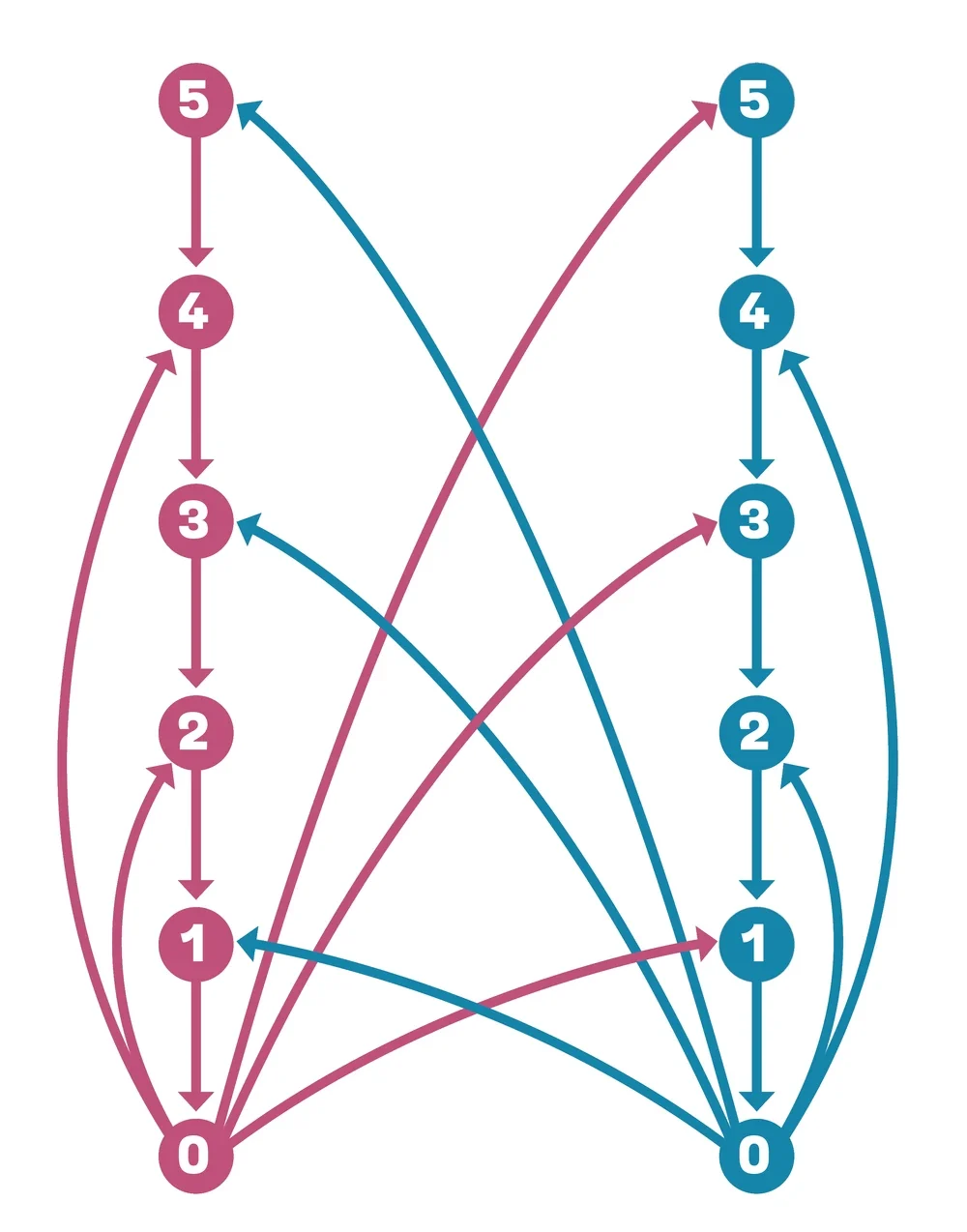
An audit of the current entries within the "Theory" and "Notation" categories of the Juggle Wiki highlights the severity of the situation. Out of a sample of 22 key pages, nine lack any reference to an external source or originator. This lack of attribution is most pronounced in pages concerning advanced mathematical models, such as the "State Machine" entry.
Furthermore, where sources do exist, they are often disconnected from their original context. For example, the wiki entry for "Dual Siteswaps" describes the concept with a level of rigidity not present in the original technical papers, such as Jack Boyce’s "Longest Prime Siteswaps." In this instance, the wiki has unintentionally created a new, modified definition that diverges from the originator’s intent, yet the wiki provides no mechanism to distinguish between the original theory and the community-edited interpretation.

The Problem of "Wiki-Native" Knowledge
Perhaps the most challenging issue is the emergence of content that originated solely on the wiki itself. These pages, often featuring complex diagrams and formal definitions, lack an author, a date of publication, or a peer-reviewed basis. These entries are "wiki-native," meaning they have no life outside the platform.
This creates an environment of circular reasoning. A user writes a theory on the wiki; another user cites that entry in a different article; the theory is then accepted as community standard. Because the platform is inherently fluid, the original intent of these anonymous contributors is lost as subsequent editors refine or alter the content. Without a stable "version of record," the community has no way to track how a theory has evolved over time or to challenge the validity of its premises.
Implications for Future Practitioners
The implications of this documentation failure are multifaceted. For the juggling historian, the lack of source material makes the reconstruction of the field’s intellectual history an exercise in conjecture. For the practitioner, it creates a "black box" effect where advanced techniques are learned without an understanding of the underlying logic or the limitations identified by the original creators.
When a field loses its primary sources, it loses its ability to self-correct. If a flaw exists in a specific notation system, but the original logic is lost, practitioners will continue to use the flawed system without knowing why it fails in certain applications. This stifles innovation, as it forces the next generation to reinvent concepts that were already documented—and subsequently lost—years prior.

A Call for Systematic Reform
To address these challenges, the community must transition from a model of passive aggregation to one of active archival preservation. Experts in the field, including those who have historically contributed to the development of notation, are encouraged to:
- Digitize and Mirror: Efforts must be made to locate original manuscripts, PDF drafts, and source diagrams to ensure they are hosted on permanent, stable, and searchable platforms (such as the Internet Archive or academic repositories).
- Standardize Citation: The wiki platform must adopt a more rigorous citation policy, requiring that all theoretical claims be linked to an external, verifiable source.
- Establish a Peer-Review Mechanism: The community would benefit from the creation of a formal body—or at the very least, a structured peer-review process—that can validate new theoretical contributions before they are accepted as community standards.
- Create Dedicated Publishing Outlets: As noted by those attempting to document these theories, the current infrastructure is inadequate. There is a demonstrable need for a dedicated, non-wiki outlet where researchers can publish formal papers, receive feedback, and maintain a permanent record of their work.
The current state of juggling documentation is a cautionary tale for any community that relies on the internet for its collective memory. The transition from an informal, hobbyist-led collection of ideas to a robust, intellectually sound discipline requires that the community treats its history with the same level of precision it applies to the practice of the craft itself. Without a commitment to archival integrity, the innovations of today risk becoming the lost lore of tomorrow.