


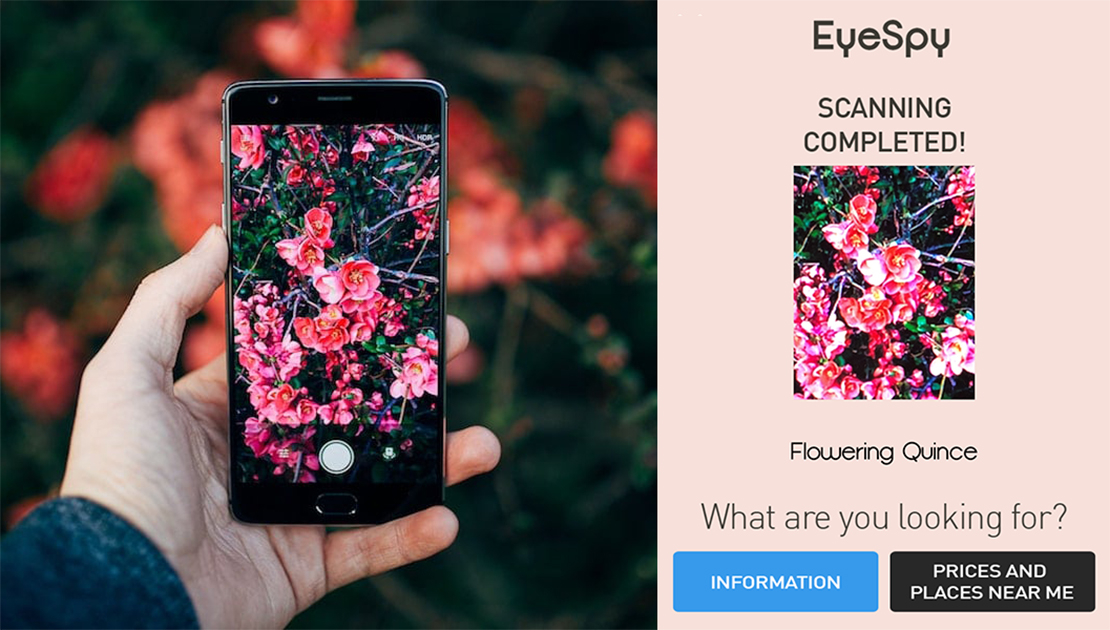
The landscape of citizen science and personal discovery has shifted dramatically with the widespread adoption of advanced visual recognition tools. Among the frontrunners in this technological wave is EyeSpy, a mobile application engineered to bridge the gap between human curiosity and complex artificial intelligence. Functioning in a manner reminiscent of audio-identification platforms like Shazam, EyeSpy allows users to decode their physical surroundings simply by capturing a photograph. Whether navigating a dense urban environment, hiking through a remote wilderness trail, or strolling through a suburban backyard, the application transforms a smartphone camera into an instantaneous portal of knowledge, capable of identifying flora, fauna, automobiles, apparel, landmarks, and fine art.
At its core, the platform is designed to democratize access to information, engaging users of all ages in active observation. By leveraging sophisticated neural networks and expansive proprietary data sets, EyeSpy bridges the divide between passive observation and active learning. As mobile technology continues to integrate deeper into daily life, applications such as this represent a significant leap forward in how humanity interacts with, understands, and catalogs the physical world.
The Evolution of Image Recognition and the Birth of EyeSpy
The journey toward real-time visual identification has been decades in the making. Early iterations of computer vision relied heavily on rigid algorithms, manual tagging, and constrained environments to correctly label objects. However, the advent of deep learning and convolutional neural networks in the early 2010s revolutionized the field. Machines could suddenly be trained on millions of images, learning to recognize complex patterns, textures, shapes, and contexts much like the human brain.
Capitalizing on these breakthroughs, the developers behind EyeSpy envisioned a tool that could aggregate disparate branches of knowledge—ranging from botany and zoology to art history and automotive engineering—into a single, user-friendly interface. Launched to engage the public in the burgeoning field of citizen science, the application was built on the premise that ordinary individuals could contribute meaningfully to scientific data collection while simultaneously satisfying their own intellectual curiosity.

Chronology of Development and Public Release
The development of EyeSpy followed a rigorous trajectory typical of modern software engineering and machine learning deployment:
Phase 1: Conceptualization and Initial Data Modeling. Developers began compiling vast datasets of categorized images, focusing initially on high-frequency identification targets such as common plant species, domestic animal breeds, and prominent architectural landmarks.

Phase 2: Closed Beta and Neural Network Training. Early prototypes were tested within controlled environments to refine the neural network’s accuracy. During this phase, the artificial intelligence was trained to filter out noise, lighting irregularities, and obstructions commonly found in amateur photographs.
Phase 3: Official Marketplace Rollout. EyeSpy officially launched on major mobile ecosystems, becoming available for download on iOS via the Apple App Store and on Android via the Google Play Store. This expansion allowed the application to tap into a global user base.
Phase 4: Continuous Machine Learning Integration. Post-launch, the application shifted into an iterative growth model. Every photograph uploaded by a user serves as a data point, enabling the artificial intelligence to refine its predictive models, reduce error rates, and expand its catalog of recognizable entities.

Under the Hood: How Artificial Intelligence Powers EyeSpy
The technical framework supporting EyeSpy is a sophisticated amalgamation of computer vision, cloud computing, and automated data retrieval. When a user captures an image through the mobile application, the raw file is transmitted securely to cloud-based servers where the heavy computational lifting takes place.
First, the artificial intelligence executes a preprocessing protocol to enhance image quality, correct exposure issues, and isolate the primary subject from background clutter. Next, the neural network analyzes the visual features—evaluating contours, color spectrums, textural gradients, and structural geometries. This data is cross-referenced against the application’s comprehensive internal datasets.

Upon securing a high-confidence match, EyeSpy does not merely provide a label; it contextualizes the discovery. The software queries external information repositories, most notably Google and Wikipedia, to compile a concise, informative summary for the user. This summary is then displayed alongside the newly categorized image, which is automatically cataloged in the user’s personal digital collection within the app.
Present Capabilities: From Species Identification to Fine Art
As of its current operational stage, EyeSpy boasts a remarkable breadth of recognition capabilities. While many identification apps specialize in a single niche—such as bird-watching or flower identification—EyeSpy functions as a comprehensive generalist tool.

Flora and Fauna Identification
One of the most robust features of the platform is its ability to catalog living organisms. The AI currently recognizes approximately 30,000 distinct species of plants and animals. This includes a wide array of flora, ranging from common wildflowers to exotic houseplants, as well as an extensive database of animal species and specific domestic breeds. Botanists and zoologists have noted that such tools lower the barrier to entry for amateur naturalists, fostering a broader appreciation for biodiversity.
Urban Exploration and Material Culture
Beyond the natural world, EyeSpy excels at identifying manufactured goods and cultural artifacts. Users can photograph automobiles to instantly retrieve make, model, and year information. The application also processes apparel, shoes, and brand logos, allowing consumers to identify fashion items in real time. Furthermore, the software’s ability to recognize fine art, paintings, and historical landmarks turns a standard museum visit or city walk into an interactive educational experience.
The Synergy Between User Participation and AI Improvement

A critical factor in the ongoing success and viability of EyeSpy is the symbiotic relationship between its user base and its machine learning algorithms. Artificial intelligence, despite its advanced state, is fundamentally dependent on the quality and quantity of training data it receives.
The founder of the platform has frequently emphasized that human participation is indispensable to the app’s evolution. In public statements regarding the platform’s development, leadership has noted that while current accuracy rates are remarkably high for a vast array of objects, continuous model refinement requires an ever-expanding influx of real-world photographs.
When users photograph rare plant species in remote regions, unique architectural variants in historical towns, or unconventional angles of everyday objects, they inadvertently contribute to the global training dataset. This crowdsourced methodology ensures that the AI adapts to real-world variability—such as seasonal changes in foliage, weathering on buildings, and evolving fashion trends—thereby driving a continuous upward spiral in the application’s overall intelligence and reliability.

Broader Impact and Implications for Citizen Science
The proliferation of tools like EyeSpy carries profound implications for the broader movement of citizen science. Historically, rigorous scientific data collection was the exclusive domain of institutional researchers equipped with specialized funding and equipment. However, the rise of smartphones equipped with high-resolution cameras, GPS sensors, and high-speed internet connectivity has decentralized data gathering.
By gamifying the process of discovery, EyeSpy encourages children and adults alike to engage actively with their local ecosystems and built environments. This heightened engagement fosters environmental stewardship and scientific literacy. When individuals can instantly identify an invasive plant species in their local park or recognize a rare butterfly during a weekend hike, they are more likely to report ecological shifts, participate in conservation initiatives, and appreciate the delicate balance of local ecosystems.

Furthermore, educational institutions have begun exploring the integration of such applications into curricula. Teachers can utilize visual recognition technology to lead outdoor biology lessons, art history explorations, and geography field trips, transforming abstract classroom concepts into tangible, hands-on experiences.
Future Outlook and Technological Horizons
As mobile processing power increases and edge-computing capabilities improve, the future of applications like EyeSpy points toward even greater autonomy and speed. Future iterations may feature offline recognition modes, allowing users to identify species and objects in remote wilderness areas devoid of cellular coverage. Additionally, advancements in augmented reality (AR) could allow the application to overlay informational tags directly onto the live camera viewfinder, creating a seamless, mixed-reality educational interface.

For now, EyeSpy remains freely accessible to the public, with downloads available across both major mobile operating systems. As millions of users continue to point their lenses at the world around them, the platform stands as a testament to the powerful synergy between human curiosity and artificial intelligence, permanently altering how society interacts with the physical universe.