
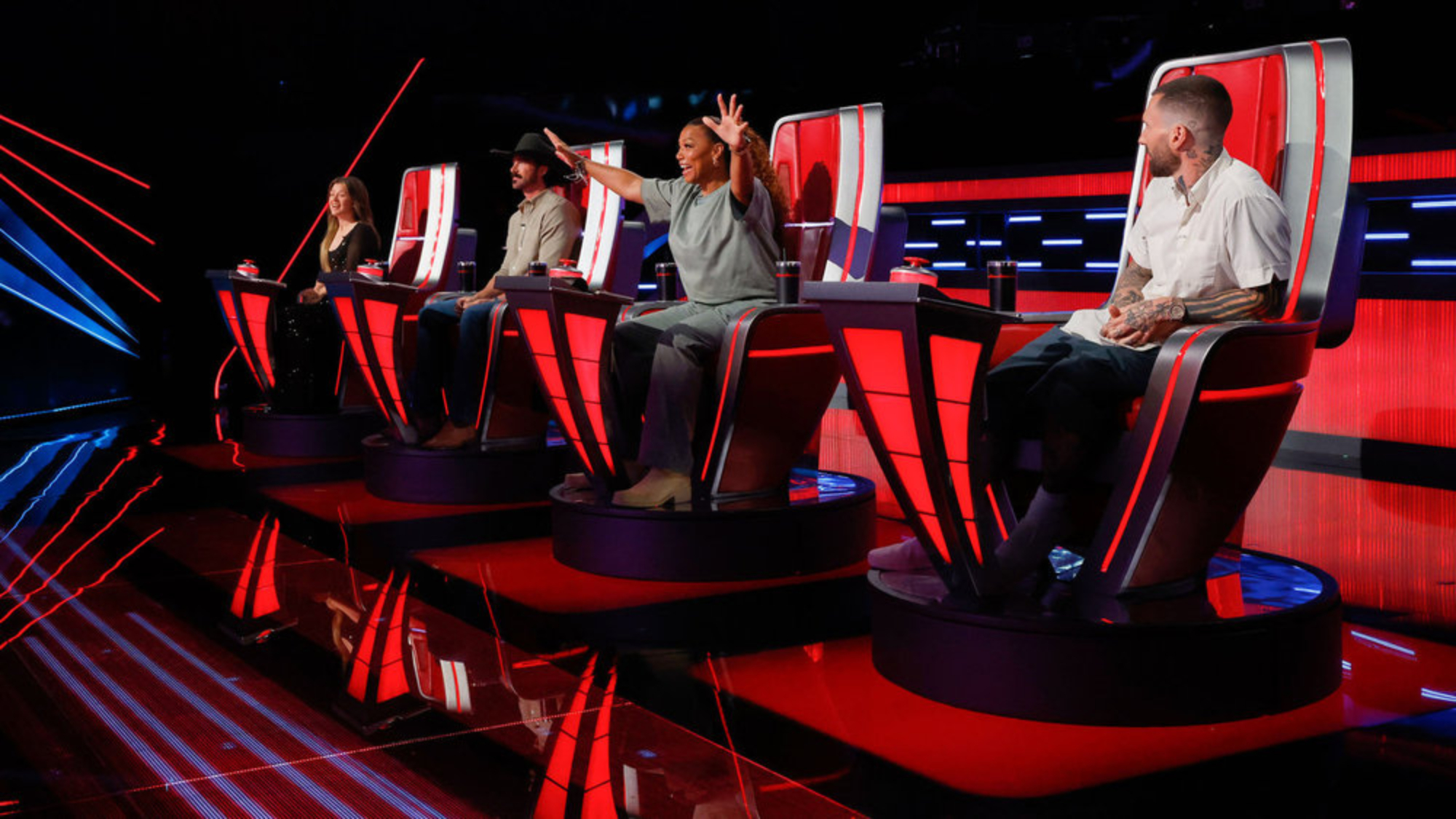
The landscape of NBC’s long-running reality singing competition, The Voice, is undergoing a dramatic structural evolution as it reaches the midpoint of its milestone 30th season. Following the conclusion of the fiercely contested Battle Rounds on October 26, the network and production team have officially retired the traditional Knockout Round format that has defined the middle tier of the competition for over a decade. In its place, Season 30 introduces an entirely new phase of the tournament: Cut Week. This unprecedented competitive hurdle represents the most aggressive and high-stakes elimination process in the history of the franchise, fundamentally altering the strategic calculations required of both coaches and contestants alike as the race for the championship narrows.
As the dust settled on the final Battle Round performances, the composition of the four coaching teams—led by returning veterans Kelly Clarkson and Adam Levine, alongside newcomers Queen Latifah and Riley Green—solidified into a remarkably balanced playing field. Entering this uncharted competitive territory, each of the four coaches retains exactly seven artists on their respective rosters, resulting in a total pool of 28 remaining hopefuls. However, the path forward is extraordinarily narrow. Under the new parameters of Cut Week, only three contestants from each team will ultimately survive the gauntlet to secure their coveted places in the Live Shows. This means that out of the 28 artists currently standing, a staggering 16 will be eliminated before the public voting phase even begins, marking a historic culling of talent that has sent ripples of anxiety throughout the rehearsal rooms.
The mechanics of Cut Week are designed to maximize both coach agency and last-chance drama. Before the competitive performances begin, each coach is granted the difficult power to select a predetermined number of contestants—totaling eight across the entire panel—to bypass the grueling Cut Week trials entirely, sending them straight through to the Live Shows. For the remaining five members on each team, survival will require taking the stage during Cut Week to fight for the single remaining slot allocated to their respective roster. This hybrid approach of direct advancement and high-stakes playoff performance creates a multi-layered psychological challenge, forcing artists to either rest on the laurels of their coach’s early endorsement or deliver a breakthrough performance under immense pressure.
Reaction from the coaching panel has been a mixture of stunned disbelief, frustration, and dark humor, highlighting the genuine emotional toll exacted by the new format. Adam Levine, a veteran of the red chairs who has witnessed nearly every twist and iteration of the show over the years, did not mince words when assessing the severity of the new round. Speaking to production staff following the final battles, Levine noted that the intensity of the upcoming phase demands absolute perfection from the artists. “Cut Week is going to be brutal, so you want to be in the best position you can going into the Live Shows,” Levine remarked, emphasizing that the margin for error has effectively shrunk to zero.
Meanwhile, Queen Latifah offered a humorous yet poignant take on the stressful atmosphere backstage, joking about the colloquial renaming of the phase among the cast and crew. “I think this is cuss week, because everybody has been cussing up a storm around here,” she quipped during a behind-the-scenes interview. The Grammy-winning artist and actress expressed visible reluctance at the prospect of dismantling the team she has carefully curated and nurtured through the Blind Auditions and Battles. “To have to cut anyone is going to be really tough, because everybody is doing their thing,” she complained, echoing the protective instincts common among the coaching staff. “I don’t want to let anybody go. I love my team.”
Kelly Clarkson, whose competitive pedigree on the show is well-established, delivered a characteristically blunt assessment of the situation during a conversation with longtime host Carson Daly. Visibly dismayed by the strict mathematical limits imposed by the producers, Clarkson summed up the general consensus in the room with a succinct observation: “It’s really not cool.” Her frustration underscores a broader reality for the coaching panel: after investing significant time and emotional energy into coaching diverse vocalists through complex arrangements and vocal pairings, being forced to terminate the journeys of a majority of their teams in a single week runs counter to the supportive mentorship model that has historically defined the series.
To fully understand the weight of this new phase, it is necessary to examine the structural evolution of The Voice across its thirty seasons. Historically, the competition followed a predictable trajectory: Blind Auditions yielded large teams, which were then trimmed during the Battle Rounds through direct vocal duets judged solely by the coaches, occasionally modified by the introduction of steals and saves. Following the Battles, contestants traditionally entered the Knockout Rounds, where artists went head-to-head singing individual songs of their own choosing, leading up to the fan-voted Live Shows. By replacing the Knockouts with Cut Week, NBC and the show’s producers have engineered a streamlined, accelerated pathway to the lives that drastically reduces the number of mid-tier performance episodes while drastically increasing the competitive pressure on the remaining acts. Industry analysts suggest this move is designed to heighten viewer engagement and create immediate, high-stakes television moments that resonate strongly on social media platforms, where short-form clips of emotional eliminations routinely drive audience retention.
The immediate implications of this format shift extend far beyond television ratings; they fundamentally alter the strategic landscape for the contestants. With only twelve total spots available in the Live Shows—three per team—the statistical odds of survival have plummeted compared to previous seasons where larger cohorts advanced to face the viewing public. Artists who relied on steady, incremental growth rather than explosive, star-making moments now find themselves at a distinct disadvantage. Furthermore, the strategic use of team steals during the Battle Rounds has resulted in several rosters featuring cross-pollinated talent—artists who originally auditioned for or were mentored by opposing coaches now fighting for survival under a new banner. This dynamic introduces complex loyalties and narrative tension as Cut Week approaches.
A detailed look at the current rosters reveals a diverse array of vocal styles, genres, and backgrounds set to collide in Cut Week, highlighting the eclectic nature of Season 30’s talent pool.
Team Adam enters Cut Week with a formidable and stylistically varied group of seven artists. The roster features Amanda Mikkel, whose recent emotional performance alongside Julia on the classic ballad “Can’t Help Falling in Love” showcased a delicate, dreamy vocal control that deeply impressed the coaching staff. Alongside Mikkel is Brandon Diaz, an agile vocalist originally drafted onto Team Queen who was successfully poached via a steal during the Battles following an electrifying, high-energy collaboration on a Stevie Wonder classic alongside Bryan Jaymes. Connor Closs brings a contemporary alternative edge to the team, having demonstrated effortless high-register control in his pairing with Cal on sombr’s track “Homewrecker.” Rounding out Team Adam’s diverse lineup are Dakota Cohen, who earned a standing ovation alongside Destinee Monroe for a soaring, high-octane rock rendition of Evanescence’s “Bring Me to Life”; Evan James, whose easy-going country cadence resonated strongly with audiences during his Tucker Wetmore cover alongside Luke; Lexi Stephens, whose social media presence and traditional vocal styling have built a dedicated following; and Owen Uffens, whose gentle, acoustic-driven delivery on Ed Sheeran’s “Dive” displayed a mature interpretive depth.
Team Kelly presents an equally competitive front, characterized by vocal powerhouses and deeply emotive storytellers. Anna McElroy anchors the team’s emotional core following a deeply moving duet on “Some Things I’ll Never Know” alongside Johnnie. Brianna Cameron brings infectious rhythm and stage presence, having injected heavy groove into a cover of Duffy’s “Mercy” during the Battles. Brooklyn Marie adds a distinct contemporary flavor, while Koumba Diallo has consistently captivated viewers with raw emotional vulnerability, notably during a sensitive cover of Billie Eilish’s “BIRDS OF A FEATHER” alongside Lance. Kyle Davis brings heartfelt sincerity, highlighted by a touching rendition of “Take Me Home.” In a notable tactical move, Kelly Clarkson secured Marcus Ladden Jr. via a steal from Team Queen after Ladden delivered an unreal, powerhouse vocal performance on Patti LaBelle’s “On My Own” alongside Chari. Finally, Nina Howland rounds out Team Kelly’s core group, having transformed Sia’s haunting track “Breathe Me” into a powerful, atmospheric duet alongside Hazel.
Team Queen, managed by rookie coach Queen Latifah, boasts a dynamic mix of genre-bending artists and powerhouse vocalists who have consistently pushed the creative boundaries of the competition. Alt Bloom leads the alternative contingent, having shone brightly alongside Morgan on a soulful, intricate interpretation of Ms. Lauryn Hill’s “Ex-Factor.” BigCountry brings deep roots and traditional authenticity, stunning the coaches with intricate, pitch-perfect harmonies alongside Luke on the country standard “Tennessee Whiskey.” Bryan Jaymes contributes dynamic soul and vocal agility, while Chari remains a formidable contender thanks to her towering vocal performances. Destinee Monroe, strategically stolen from Team Adam after holding her own in the rock-heavy “Bring Me to Life” battle, adds immense versatility to the roster. Lillie Kolich represents a formidable country and pop crossover talent, and Mia Knight completes the team with a distinct contemporary vocal identity that has resonated strongly across digital platforms.
Team Riley, anchored by country music star Riley Green, leans heavily into traditional roots, storytelling, and Americana sensibilities, while maintaining unexpected versatility. Allie Rae sets a soulful tone, having commanded the stage alongside Harmony with a gritty, blues-infused take on “Ain’t No Sunshine.” Cade Mower brings contemporary singer-songwriter appeal, while Everett Bounds showcases classic country timbre, notably rocking the stage on “Louisiana Woman, Mississippi Man” alongside Caroline. The unique duo Ferryn & Brinkley adds tight family harmony and commercial country appeal, having impressed guest mentors with their energetic take on Brandy Clark’s “Mama’s Broken Heart.” Joe Henley brings deep-seated regional authenticity, having engaged in a uniquely meta battle performing coach Riley Green’s own music against partner Kenna. Kayleigh Mathews joins Team Riley as a high-value steal from Team Queen following a titanic, double-steal-triggering duet with Lillie Kolich on Little Big Town’s “Girl Crush.” Completing the roster is Keiyana Osmond, who proved her adaptability by taking Adam Levine’s signature pop-rock track “She Will Be Loved” and making it entirely her own alongside Brendan.
As fans and analysts dissect these rosters, the immediate question remains how the coaches will utilize their power to advance eight artists directly to the lives, and which remaining performers will be forced to sing for their professional lives in the upcoming episodes. The structural shift of Cut Week ensures that the traditional pacing of the season has been permanently altered, trading the multi-week progression of Knockout rounds for a condensed, high-pressure crucible. With production values at an all-time high and the talent pool representing some of the most competitive vocalists in the history of the NBC franchise, the fallout from Cut Week is guaranteed to set a new standard for reality television competition.
The Voice continues its landmark 30th season, airing new episodes weekly on Mondays on NBC, as viewers prepare to witness the largest and most consequential elimination event in the history of the series.