
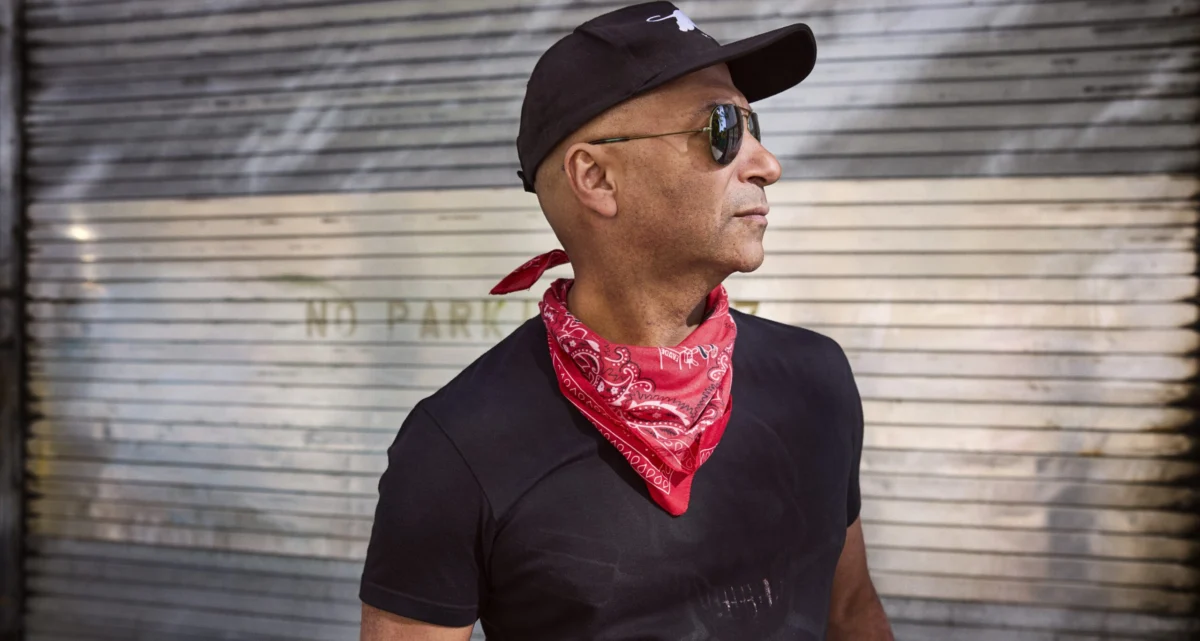
The landscape of modern rock has long been defined by the unmistakable, high-voltage guitar riffs of Tom Morello. Whether through the socio-political urgency of Rage Against the Machine, the hard-rock precision of Audioslave, or his recent collaborations with Bruce Springsteen, Morello has established himself as one of the most influential guitarists of his generation. However, the release of his latest solo project, Everyone Gets Everything They Want, reveals a pivotal shift in his creative process. For the first time in his storied career, Morello is stepping out from behind the six-string to highlight his proficiency on the four-string instrument, a role he has quietly inhabited since he began his serious musical journey at age 17.
The 62-year-old Rock and Roll Hall of Fame inductee, whose career spans over three decades, has historically kept his bass-playing capabilities largely behind the curtain. While fans recognize his signature sound—characterized by unconventional pedal usage and a distinct, percussive approach—few are aware that the foundation of his most famous compositions often began on the bass. This shift is not merely a stylistic experiment; it is a full-scale exploration of the low-end frequencies that have anchored his music for years, marking a new chapter for the Harvard-educated activist and musician.

A History of Hidden Rhythms and Secret Sessions
Morello’s relationship with the bass guitar predates his rise to global stardom. During his formative years in Chicago, he and fellow future rock icon Adam Jones, the guitarist for Tool, frequently swapped instruments. This early experimentation fostered a deep appreciation for the symbiotic relationship between rhythm and melody. Morello notes that his iconic riff for "Killing in the Name" was not conceived on a guitar, but rather on a $75 Kramer bass.
"The bass will lead the way for me sometimes," Morello explains. "When I sit down to be creative, the instrument that you have steers your creativity in unexpected ways. If you kick the distortion pedal on a bass, the riffs start sounding like Rage Against the Machine. I’ve played bass on a lot of records before, including some that you don’t know and I won’t name."

This admission sheds light on the internal mechanics of his past work. By prioritizing the "lock" between the bass and guitar, Morello has historically managed to create a dense, "tonal monster" sound that feels both heavy and agile. His approach to the studio—often plugging his bass directly into his Marshall half-stack without changing microphone settings—ensures that the low-end frequencies remain at the forefront of his sonic identity, even when he is primarily identified as a lead guitarist.
The Collaborative Genesis of Everyone Gets Everything They Want
The new solo album, Everyone Gets Everything They Want, serves as a testament to Morello’s evolving creative circle. The project features a diverse array of collaborators, including Serj Tankian, the Irish hip-hop group Kneecap, and the metalcore act Beartooth. Perhaps most significant is the involvement of his 15-year-old son, Roman Morello.

Roman’s contribution as a guitarist has fundamentally altered the elder Morello’s role in the recording process. Morello describes his son as a "shredding whiz" whose prowess has essentially relegated him to the position of rhythm guitarist in his own band. This generational collaboration adds a layer of depth to the album, blending the raw, anti-establishment angst that defined Morello’s early career with the fresh, technical precision of a new generation of musicians.
"I’ve been relegated to being the rhythm guitarist in my own band because of his shredding prowess," Morello jokes, though he emphasizes the creative vitality that this dynamic has brought to the project. The album was recorded with the assistance of producers Zakk Cervini and Tyler Smyth, who helped Morello refine his "big riff" philosophy into a cohesive solo statement.
Technical Approach and Studio Philosophy

Morello’s approach to the bass is functional rather than ornamental. He explicitly distances himself from the virtuosic, high-technical style of players like Geddy Lee, opting instead for a "groove-first" mentality. He utilizes a pick exclusively to ensure that the bass and guitar parts lock in tightly, creating a wall of sound that he describes as "fuzzy on both ends, springy on the top, and angry on the bottom."
In the studio, his methodology remains remarkably straightforward. While many modern productions rely on complex digital signal processing and layering, Morello prefers the physical interaction of a quality instrument and a tube amplifier. He cites his Fender Precision bass as his primary tool, noting that despite his access to vintage gear, a recent-build model provides the specific tonal qualities he requires for his current output.
His reverence for his longtime bandmate, Tim Commerford, remains central to his understanding of the bass. Morello consistently identifies the rhythm section of Commerford and drummer Brad Wilk as the "best in rock and roll." He attributes the specific "Rage" sound to the interplay between his own tendency to play ahead of the beat, Wilk’s tendency to play behind it, and Commerford’s ability to anchor the mix directly on the beat.

The Broader Implications of the Solo Career
The transition to a solo career is a significant milestone for a musician who has spent the majority of his professional life within the infrastructure of high-profile bands. Morello’s journey from coffee house singer-songwriter in 2002 to a festival-headlining solo act demonstrates a long-term commitment to artistic autonomy.
Following a successful summer tour with Bruce Springsteen and the launch of his Power to the People Music Festival, Morello is positioned to reach an audience that spans generations. His work continues to be characterized by its explicit political messaging—a core component of his identity that he refuses to dilute. However, he maintains that the music must stand on its own merits as a "kick-ass rock and roll" experience.

"This album is for people who have had enough," Morello states. "And for people who have been waiting for a great riff-oriented, rebellious rock record. These are anti-racist songs, these are anti-fascist songs, but above all, these are rock and roll songs. The message doesn’t mean a thing without the mosh pit."
Chronology of a Career
- 1980s: Morello and Adam Jones experiment with bass and guitar interchangeability in Chicago.
- 1991: The "Killing in the Name" riff is composed on a $75 Kramer bass.
- 1992-2000: Rage Against the Machine releases three studio albums, cementing Morello’s status as a guitar innovator.
- 2002: Morello begins a side project as a singer-songwriter, performing at open mic nights while concurrently playing arenas with Audioslave.
- 2023-2025: Morello tours with Bruce Springsteen and hosts the Power to the People Music Festival.
- 2026: Release of Everyone Gets Everything They Want, marking his first dedicated solo rock album.
Future Outlook and Industry Impact

The release of this album arrives at a time when guitar-driven rock music is undergoing a resurgence, fueled by a younger demographic eager for authentic, high-energy performances. By embracing the bass and integrating his son into his creative process, Morello is positioning himself as both a legacy artist and a contemporary force.
Industry analysts suggest that Morello’s willingness to pivot roles may serve as a blueprint for veteran artists looking to remain relevant in a changing musical landscape. By focusing on the "riff" as the primary unit of currency—rather than the instrument itself—Morello maintains a consistent brand identity while exploring new sonic territories.
As Morello prepares for upcoming live dates, the question remains: will the audience accept this shift in focus? Given the success of his recent festival appearances, it is likely that fans will embrace the change. Whether on guitar or bass, the core of Morello’s appeal has always been his ability to channel political frustration into musical energy. As he continues to push forward, he remains one of the few artists capable of bridging the gap between historical rock stature and current-day social discourse, ensuring that his influence will persist for years to come.