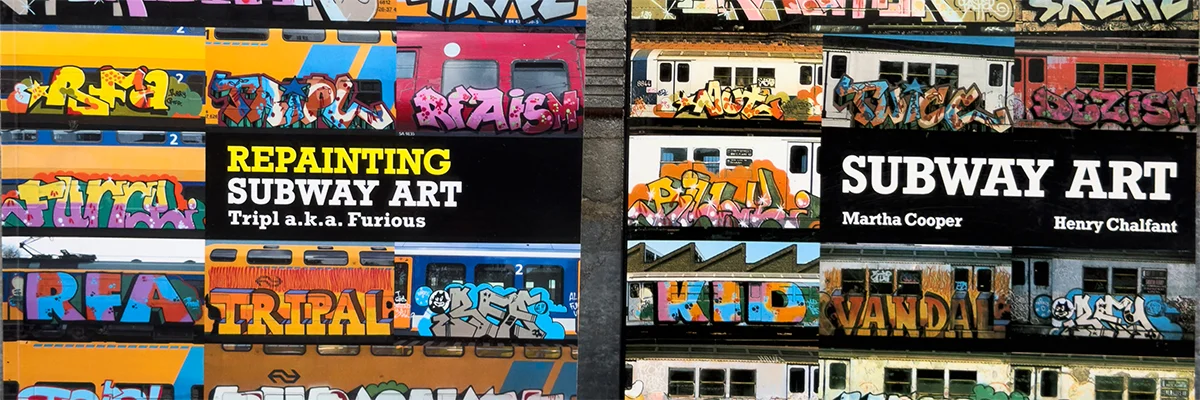
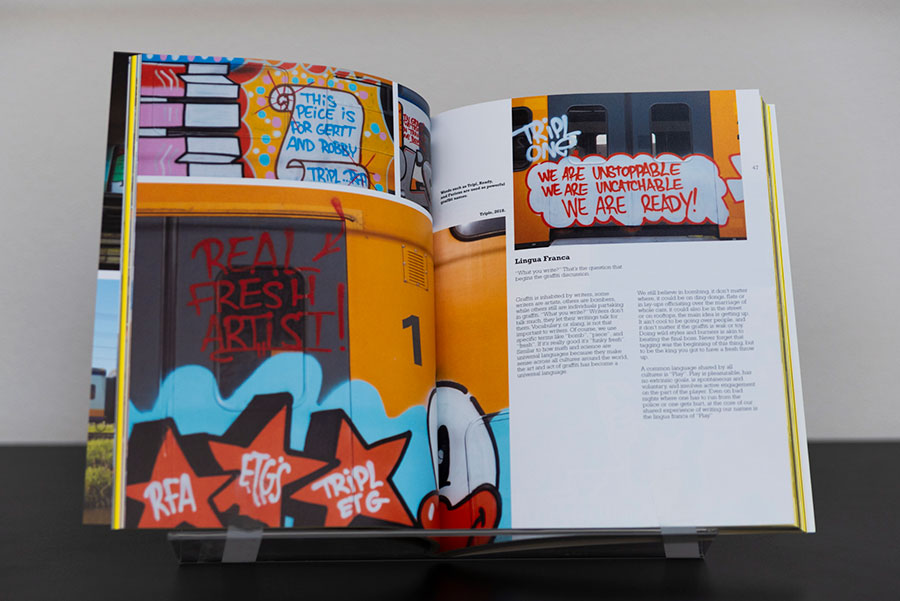
The landscape of contemporary urban art is often defined by its ephemeral nature, yet few projects demonstrate the sheer scale of devotion as the 2024 publication Repainting Subway Art. Spearheaded by the Dutch graffiti writer known as TRIPL—and operating under the alias FURIOUS—this ambitious endeavor sought to recreate all 239 works featured in the 1984 seminal text Subway Art by Martha Cooper and Henry Chalfant. What began as a casual, internal joke among peers evolved into a ten-year logistical and creative undertaking, resulting in a meticulously reconstructed archive that bridges the gap between 1980s New York City and the modern European train-writing scene.
The Historical Significance of the Original Subway Art
To understand the gravity of TRIPL’s project, one must contextualize the influence of the original 1984 book. Subway Art did not merely document a subculture; it codified it. For many, it served as the definitive "Bible" of graffiti, providing a roadmap for letter construction, style evolution, and the inherent risks of the practice. By capturing the New York City Transit Authority’s struggle against the wave of spray-painted trains, Cooper and Chalfant provided an ethnographic look at a burgeoning art movement.
The book’s impact was global. It bypassed the limitations of local scenes, reaching writers in Europe, Japan, and beyond. It was a catalyst for international graffiti culture, often passed hand-to-hand until the pages wore thin. As the years progressed, the specific aesthetic of the "New York style" became the standard against which all other graffiti was measured. By re-engaging with this source material, TRIPL is not merely mimicking the past; he is conducting an analytical study of how those early techniques have informed the visual language of the streets for four decades.
Chronology of a Decade-Long Re-creation
The timeline of Repainting Subway Art spans approximately ten years, a period defined by iterative trial and error. The project was not a simple act of photography or painting; it was a complex synchronization of various creative disciplines.
- 2014–2015: Concept and Feasibility. The initial phase involved the selection of the 239 images. TRIPL assessed the feasibility of replicating specific train models, noting that modern European rolling stock differs significantly from the New York subway cars of the late 1970s and early 1980s.
- 2016–2020: The Painting Phase. During this period, the artist focused on technical mastery, studying the original proportions, color palettes, and stylistic nuances of the writers documented in the original book. This was not a replication of his own style, but a rigorous attempt to inhabit the gestures of others.
- 2021–2023: Photographic Reconstruction. Once the pieces were painted, the focus shifted to the environment. TRIPL worked to match the original camera angles, lighting conditions, and even the "styling" of the era—sourcing vintage clothing and props to ensure the photographic record aligned with the historical source material.
- 2024: Publication. Ruyzdael Publishing finalized the project, releasing the volume to critical acclaim for its attention to detail and its contribution to the historiography of graffiti.
Technical and Logistic Challenges
The logistical hurdles of this project were immense. Reconstructing a "whole car"—a graffiti piece that covers an entire train carriage—requires significant time and access. Unlike the New York subway system of the 1980s, which was often fraught with security gaps that allowed for prolonged painting sessions, modern rail systems utilize sophisticated security, surveillance, and anti-graffiti coatings.
TRIPL’s methodology involved an intensive study of the original photographs to identify the "DNA" of each work. He had to account for the physical constraints of the trains he was painting, adapting the original compositions to fit different door placements, window sizes, and car lengths. This required an advanced understanding of geometry and typography. By working through the "DonDi" whole-car series, for instance, TRIPL had to navigate the exact circumstances of the original photographs, effectively turning himself into a researcher as much as an artist.
Broader Implications and Cultural Impact
The publication of Repainting Subway Art raises significant questions about the nature of originality in street art. Some critics argue that the project is a form of "meta-graffiti," where the subject of the work is the history of the work itself. By shifting the context from New York in the 1980s to the European landscape in the 2020s, TRIPL highlights the continuity of the subculture.
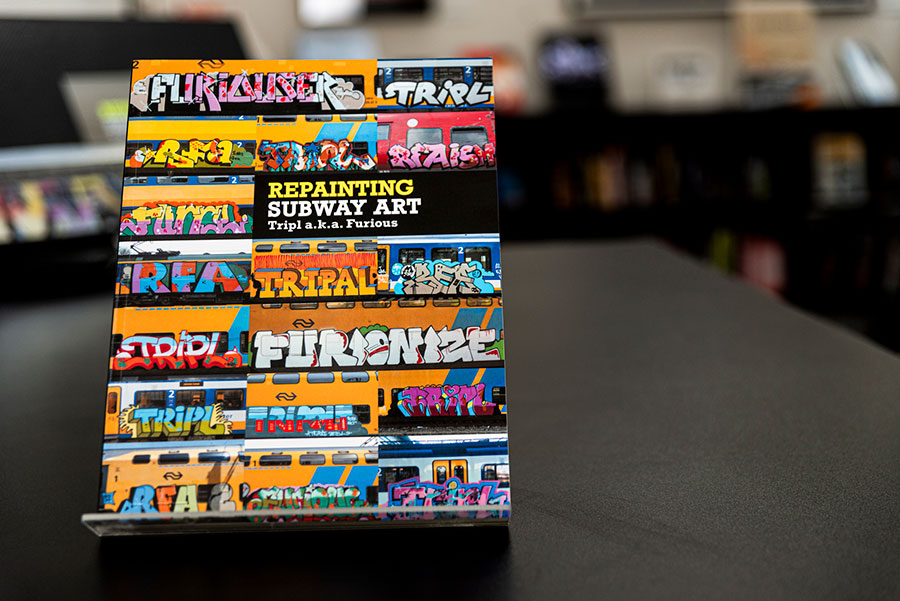
Daniël de Jongh, in his review for the Nuart Journal, characterized the project as a "reincarnation of the Bible of graffiti in slow motion." This observation underscores the project’s pedagogical value. It allows a new generation of writers to interact with the foundational works not just through a static image on a page, but through the process of physical reconstruction. It serves as a bridge between the analog era of the 1980s and the digital, globalized era of today.
From a research perspective, the project serves as an unintentional archive of the evolution of painting materials. The original 1980s works were created with early aerosol formulations, often lacking the pigment density or UV resistance of modern paints. TRIPL’s re-creations, while staying true to the original designs, naturally reflect the technical capabilities of current-day materials. This difference provides a fascinating layer of analysis for art historians and urban researchers.
Official Responses and Academic Reception
While the street art community often operates outside the purview of traditional art institutions, the academic reception to this project has been notable. Institutions such as Urban Nation Berlin have highlighted the project as a landmark achievement in the documentation of urban subcultures.
The project has also sparked discussions about the ethics of "remaking" iconic pieces. In the graffiti world, the sanctity of a writer’s original work is a core tenet. However, by positioning his work as a tribute rather than an original creation, TRIPL has largely avoided the controversy associated with plagiarism. Instead, the project is viewed as a high-level homage that requires an intimate knowledge of the original writers’ techniques. It is a testament to the fact that, even after forty years, the original Subway Art continues to dictate the terms of the discourse.
Conclusion: A Legacy Reframed
Repainting Subway Art is more than a book; it is a monument to the endurance of graffiti culture. By spending a decade recreating a document that fundamentally changed the trajectory of public art, TRIPL has ensured that the original works—and the circumstances of their creation—remain a living, breathing part of the contemporary dialogue.
As the book continues to circulate, its impact is likely to be felt in how we discuss the preservation of street art. In an age where digital documentation often replaces physical experience, TRIPL’s commitment to the physical act of painting—and to the arduous process of recreating historical conditions—serves as a reminder that the essence of the subculture lies in the labor, the risk, and the unrelenting desire to leave a mark. Whether viewed as an archival project or an artistic performance, the result is a significant addition to the history of urban art, ensuring that the legacy of 1980s New York graffiti continues to inspire and challenge future generations.