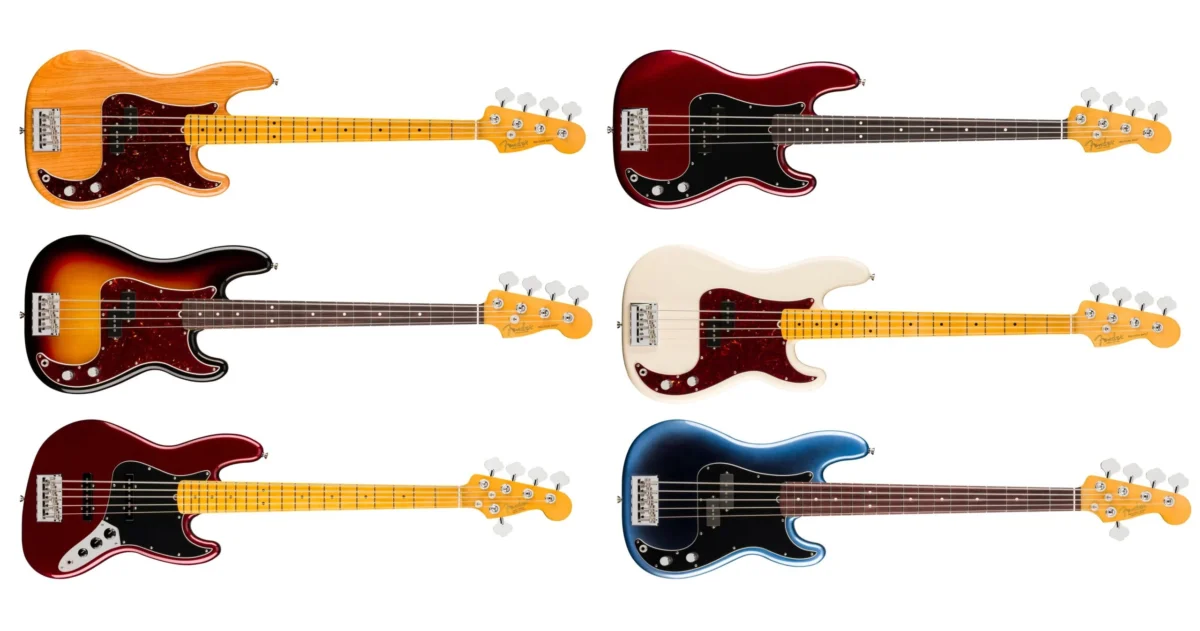
Fender Musical Instruments Corporation (FMIC) has officially announced the latest iteration of its flagship American Professional series, marking a significant advancement for the iconic Precision Bass and Jazz Bass lineups. This launch represents a strategic evolution for the company, balancing eight decades of historical design legacy with modern, player-centric engineering. By updating the Precision Bass, Precision Bass V, Jazz Bass, and Jazz Bass V, Fender aims to address the increasingly complex requirements of contemporary professional musicians, who demand both the vintage aesthetic that defined the mid-20th century and the high-performance specifications necessary for modern recording and live touring environments.
The Chronology of an Icon: From 1951 to the Present
The history of the Fender bass is the history of the modern rhythm section. In 1951, Leo Fender introduced the Precision Bass, the world’s first mass-produced electric bass guitar, which effectively solved the volume issues faced by upright bass players in the burgeoning big band and early rock-and-roll scenes. This was followed in 1960 by the introduction of the Jazz Bass, a more versatile instrument featuring a slimmer neck profile and dual-pickup configuration, designed to appeal to players seeking a wider tonal palette.

Over the last 75 years, these instruments have evolved through various eras, including the CBS ownership period, the transition to the Corona, California factory, and the introduction of the American Standard and American Elite lines. The American Professional series, first introduced in 2017, served as a bridge between the traditional specifications of the 1960s and the technological needs of the 21st century. This latest update continues that trajectory, refining the materials, electronics, and ergonomics to ensure the instruments remain the industry standard for professional bassists globally.
Engineering Upgrades: The V-Mod III and Beyond
The centerpiece of this update is the integration of the V-Mod III pickup system. Developed through extensive R&D, these pickups are designed to provide enhanced articulation and clarity while preserving the fundamental frequency response that has made the Precision and Jazz Basses the most recorded instruments in music history.
From an engineering perspective, the transition to V-Mod III signifies a shift toward wider frequency response and improved string-to-string balance, a critical requirement for five-string models where the low-B string often struggles to maintain the same punch and growl as the traditional E-string. The inclusion of ClassicGear potentiometers further enhances the user experience by providing a smoother, more consistent taper, allowing for precise volume and tone adjustments during high-stakes live performances.

Neck profiles have also been re-evaluated. The American Professional Jazz Bass now features a "Slim C" profile, prioritizing speed and comfort, while the Precision Bass utilizes a "Modified 1963 C" shape, which offers a substantial feel that many professional players associate with the "Golden Era" of Fender production. The consistency of these neck profiles is achieved through advanced CNC milling processes at the Corona, California facility, ensuring that every instrument meets the high tolerances required by touring professionals.
Market Context and Industry Impact
The release comes at a time when the musical instrument market is experiencing a significant shift toward "pro-sumer" accessibility. According to recent industry reports, the demand for high-end, reliable tools among home-studio producers and gigging musicians has surged. By pricing these instruments between $1,899.99 and $2,049.99, Fender is positioning the American Professional series as the benchmark for the professional tier, placing it above the entry-level Player series but below the boutique-oriented American Ultra or Custom Shop lines.
This strategy serves to solidify Fender’s grip on the mid-to-high-end market segment. In a highly competitive landscape, the ability to maintain brand heritage while introducing tangible performance upgrades is a delicate balance. Analysts note that Fender’s commitment to keeping production in the United States while utilizing modern manufacturing techniques allows them to maintain a "Made in USA" value proposition that remains highly attractive to collectors and professional artists alike.

Strategic Design Philosophy
The development process for this iteration of the American Professional series was heavily influenced by feedback from a global network of artists and session musicians. Fender’s product development team conducted extensive field testing, observing how musicians interact with their instruments under varying conditions—from humid outdoor stages to climate-controlled, high-fidelity recording studios.
The findings from these sessions led to the refinement of hardware, including the stability of the bridges and the durability of the tuning machines. The decision to retain traditional nitrocellulose-adjacent finishes or high-durability urethane coatings is a direct result of balancing the demand for aesthetic authenticity with the practical need for road-ready durability. The inclusion of a deluxe molded case with every unit underscores the "working player" focus, ensuring that the instrument is protected during the rigorous transit schedules of modern touring.
Future Implications for the Brand
As Fender looks toward the next decade, the American Professional series acts as the "anchor" of its product ecosystem. By successfully updating these legacy instruments without alienating traditionalists, the company ensures the continued relevance of the Precision and Jazz designs for future generations.

The introduction of the V and V-string models—specifically the Precision Bass V and Jazz Bass V—highlights the evolving nature of music production, where extended-range instruments are increasingly common in genres ranging from gospel and R&B to progressive metal. Fender’s willingness to treat the five-string configuration with the same design rigor as the standard four-string indicates a recognition of shifting demographics in the bass-playing community.
Conclusion: A Legacy Refined
The latest American Professional series is not a reinvention of the wheel, but rather a precision-tuning of a proven mechanism. By focusing on the core elements—pickup response, neck ergonomics, and control reliability—Fender has effectively modernised its most storied instruments.
For the professional bassist, the choice of a Precision or Jazz Bass remains a decision rooted in the necessity of reliability and tonal authority. With this latest update, Fender has ensured that these instruments continue to provide the sonic foundation for the next chapter of contemporary music. As the instruments move into the hands of working musicians globally, the impact of these engineering refinements will be measured in the studio sessions and on the concert stages where they are destined to serve as the backbone of the rhythm section for years to come. The series is currently available through authorized Fender dealers, with a wide array of finish options including the sophisticated "Dark Night" and the classic "3-Color Sunburst," ensuring that personal expression remains as central to the experience as the technical performance.