The landscape of traditional country music is defined not only by the iconic voices that fronted the genre, but equally by the master musicians who provided the bedrock of their sound. Among these instrumental architects, Richard “Sonny” Curtis held a revered, if understated, place. A virtuoso of the pedal steel guitar, Curtis spent decades anchoring the rhythms and lifting the melodies of country music royalty. Though he passed away on October 11, 2019, at the age of 83 in Somerset, Kentucky, following a protracted battle with Alzheimer’s disease, his musical footprint remains deeply embedded in the genre’s history. As the years pass, the country music community continues to reflect upon the life, career, and enduring legacy of a man whose strings helped define an era.
Born in 1935 and raised in Chillicothe, Ohio, Curtis emerged from a Midwestern background that seemed unlikely to produce a titan of traditional Southern music. Yet, the mid-20th-century American musical landscape was fertile ground for young talents drawn to the emerging sounds of rockabilly and honky-tonk. Like many of his contemporaries, Curtis navigated the local club circuits of Ohio during the mid-to-late 1950s, sharpening his craft in smoky bars and regional venues. It was during this formative period that he crossed paths with fellow Ohio native Bobby Bare—who would go on to achieve mainstream acclaim with timeless records like “Marie Laveau,” “Detroit City,” and “500 Miles Away From Home.” The two young artists shared stages in local establishments, laying the groundwork for careers that would eventually intersect with Nashville’s golden age.
Interestingly, Curtis’s relationship with the instrument that would define his professional life did not begin with immediate affection. According to biographical accounts, Curtis initially detested the sound of the pedal steel guitar. That perspective shifted radically just before his graduation from Chillicothe High School in 1954, when an encounter with steel guitarist Bobby Irwin exposed him to the instrument’s expressive capabilities. Captivated, Curtis dove headfirst into mastering the device. In a testament to his sheer determination and unorthodox beginnings, he initially learned to play with the strings positioned backward because he had no formal instruction or guidance on the correct configuration. This unique learning curve arguably contributed to his distinct stylistic approach once he finally reached professional prominence.
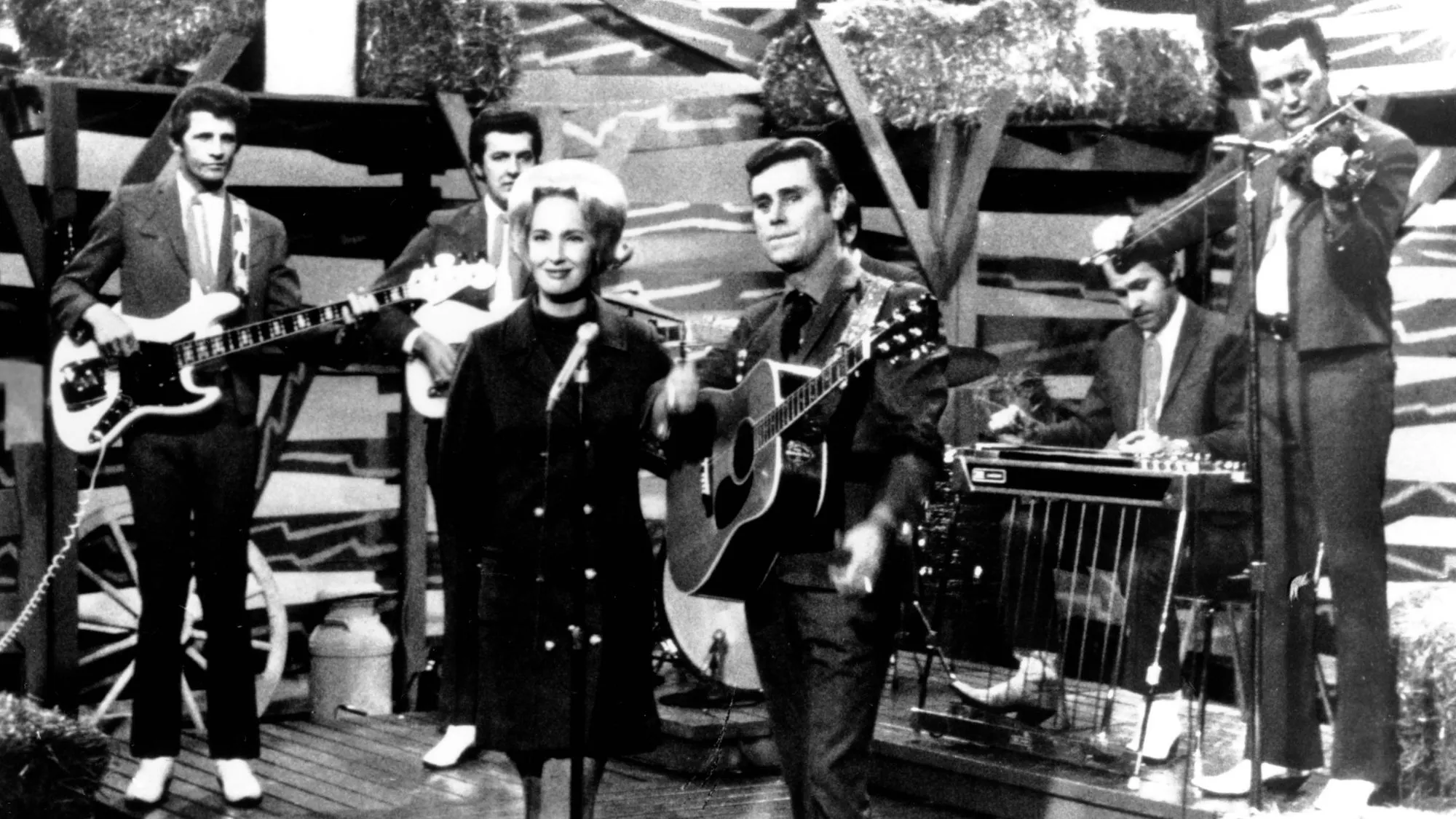
The defining chapter of Curtis’s professional career commenced in 1964. Word of the talented Ohio-born steel player reached George Jones, one of the most revered and influential vocalists in the history of recorded music. Jones, known famously as “The Possum,” operated with a level of musical precision that demanded top-tier accompaniment. He enlisted Curtis to join the Jones Boys, his legendary backing band. In the tradition of elite ensemble units like Buck Owens’ Buckaroos and Merle Haggard’s Strangers, Jones rarely—if ever—performed or recorded without his signature band.
As a fixture of the Jones Boys, Curtis contributed his distinctive tone to the vast majority of Jones’s seminal early recordings. His pedal steel work provided the weeping, emotional counter-melodies that underpinned Jones’s signature heartbreak anthems. Furthermore, Curtis’s versatility extended beyond the Jones catalog. Music historians and sharp-eared fans can hear his unmistakable touch on the intro to Johnny Paycheck’s breakout 1968 hit, “A-11.” Paycheck himself had spent time as a member of the Jones Boys during the 1960s, creating an interconnected ecosystem of top-flight Nashville session and touring musicians. Curtis’s steel guitar could also be heard backing an elite roster of country music icons, including Tammy Wynette, Charley Pride, and Minnie Pearl, cementing his status as a premier utility player in the Nashville studio and touring circuits.
The interconnected web of country music royalty became even more pronounced in 1969 when George Jones married Tammy Wynette, uniting two of the genre’s biggest superstars. For Curtis, this union meant an expansion of his professional duties, as he continued to provide musical support for both artists during their marriage and respective solo careers. Following Jones and Wynette’s high-profile divorce in 1975, Curtis demonstrated his loyalty and musical indispensability by continuing to tour and record with Wynette for an additional five years, remaining a fixture of her road band into the early 1980s.
Despite spending the bulk of his career in supporting roles, anchoring the soundscapes for household names, Curtis eventually stepped into the spotlight as a primary artist later in life. In 2002, he released his lone solo album, Reflections, offering fans a focused showcase of his instrumental mastery away from the vocal arrangements of his famous employers. The project served as a late-career testament to his technical skill and deep reverence for traditional country music instrumentation.
In his personal life, Curtis found stability and companionship during his later years. At the time of his passing in 2019, he was survived by Barbara, his wife of 19 years, and his son, Rick. While mainstream public records concerning his early life remain sparse—relying heavily on localized accounts, family recollections, and the digital archives maintained by music historians—the professional record of his contributions is indelible.
The broader implications of musicians like Sonny Curtis within the history of American popular music point to the crucial, often unsung role of the backing band. While vocalists like George Jones and Tammy Wynette rightfully captured the public imagination and drove record sales, the emotional weight of their music relied heavily on the micro-interactions of ensemble players. The pedal steel guitar, with its ability to mimic the human voice through sweeping bends and sustained vibrato, served as the emotional proxy for the heartbreak, longing, and despair central to classic country themes. Curtis mastered this emotional translation, ensuring that records cutting through the static of mid-century AM radios left a permanent mark on the cultural consciousness.
As the years move forward, the passing of figures from country music’s mid-century golden era signals a transition from living history to archival legacy. Artists like Sonny Curtis represent a bridge to a time when Nashville’s recording studios functioned as tight-knit communities of road-hardened professionals who could sight-read arrangements, capture raw emotion on tape, and elevate standard three-chord country songs into high art. Though the physical stages and recording booths of that era have largely evolved, the recorded legacy of Richard “Sonny” Curtis remains preserved in the grooves of vinyl records and the digital archives of country music history, ensuring that his contributions will continue to resonate with generations of musicians and fans alike.