

Madrid, Spain’s sprawling economic and cultural capital, anchors a metropolitan region home to approximately 3.5 million residents. As one of Western Europe’s premier urban destinations, the city attracts over 10 million international and domestic visitors annually. Beyond its architectural grandeur and vibrant social fabric, Madrid functions as the political, administrative, and financial heart of the nation. While neighboring Barcelona often captures a larger share of international leisure tourism, Madrid offers an intricate tapestry of imperial history, world-class artistic institutions, and a burgeoning culinary ecosystem that operates on a distinctively late-night schedule.
Tourism authorities and municipal planners emphasize that navigating a destination of this scale requires a structured approach. To optimize visitor flow, manage urban congestion, and support sustainable tourism practices, travel experts have outlined a comprehensive five-day itinerary. This framework balances marquee cultural landmarks—such as the UNESCO-designated Paseo de la Luz—with lesser-known historical sites, regional day trips, and decentralized culinary exploration across the city’s distinct neighborhoods.
Day One: The Paseo del Prado and the Golden Triangle of Art
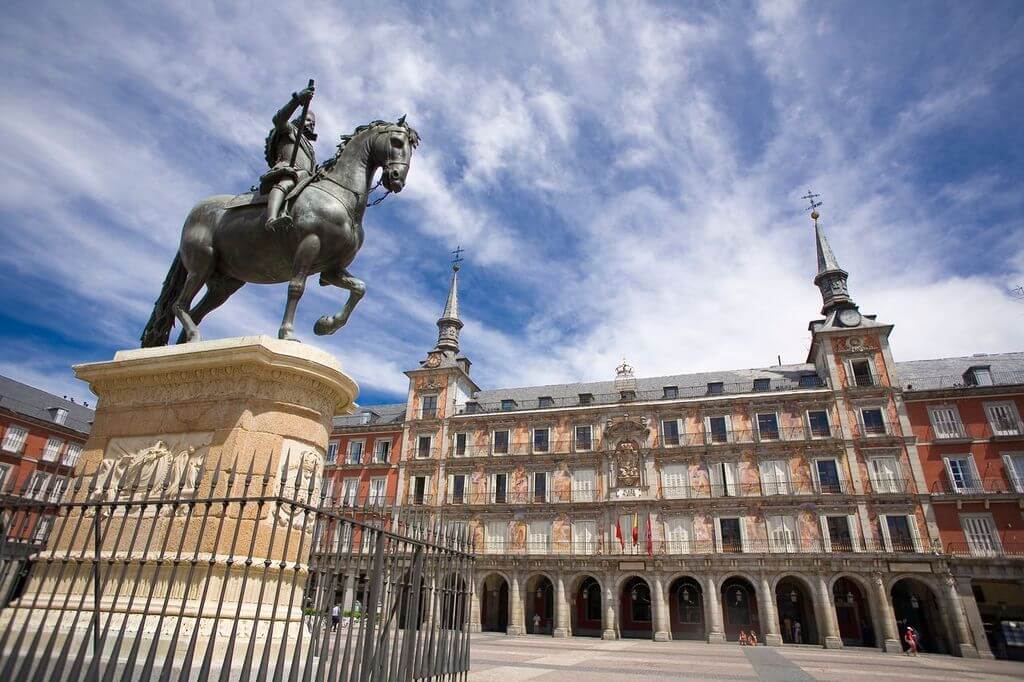
The inaugural day centers on the Paseo del Prado and Retiro district, an urban landscape officially inscribed as a UNESCO World Heritage site in 2021. Encompassing more than 40 historical monuments and architectural assets, this corridor represents one of the densest concentrations of cultural heritage in Europe.
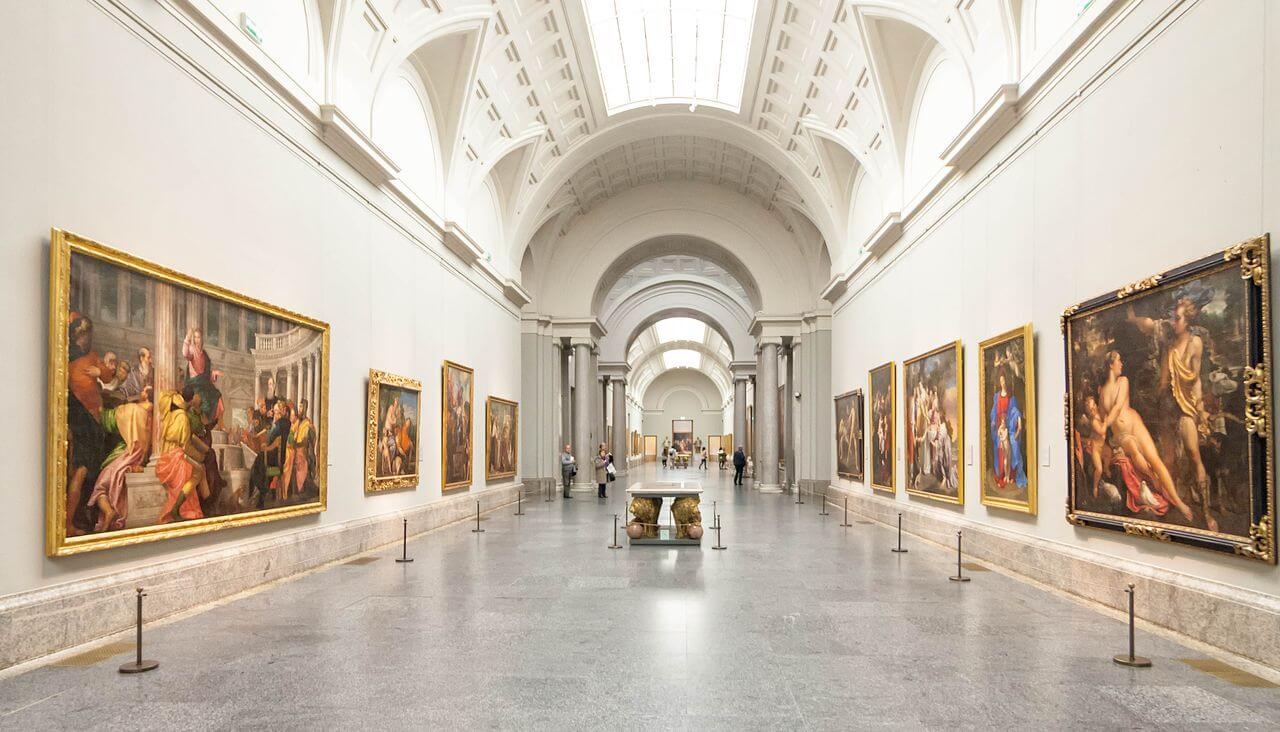
The chronological route commences at the Prado Museum, widely recognized as one of the preeminent fine arts institutions globally. Housing extensive collections amassed by the Spanish Habsburg and Bourbon monarchies, the museum features foundational works by Spanish masters such as Francisco Goya, Diego Velázquez, and El Greco, alongside international luminaries including Peter Paul Rubens, Sandro Botticelli, and Caravaggio. Cultural heritage analysts recommend allocating a minimum of three to four hours to navigate the sprawling galleries adequately.
Continuing northward along the tree-lined Paseo del Prado, visitors encounter the Thyssen-Bornemisza Museum. This institution bridges art historical eras, transitioning visitors from Italian primitives and Renaissance masterpieces through 19th-century impressionism to American pop art. The itinerary culminates at the Reina Sofía National Art Center, Madrid’s premier contemporary art museum. Housed in a former 18th-century hospital building, the Reina Sofía holds a vast inventory of 20th-century avant-garde works by Salvador Dalí, Joan Miró, Wassily Kandinsky, and Pablo Picasso. Its centerpiece is Picasso’s monumental 1937 anti-war oil painting, Guernica, which draws hundreds of thousands of art historians and global observers annually.
To transition from visual arts to gastronomy, afternoon dining options reflect Madrid’s architectural diversity. Traditional establishments like Taberna La Fragua de Vulcano serve classic regional staples such as cocido madrileño, a multi-course chickpea and meat stew historically rooted in working-class Castilian cuisine. Alternatively, contemporary venues near the Reina Sofía, including Arzábal, emphasize modern reinterpretations of traditional tapas, while the restored 17th-century brick wine caves of Bodega de los Secretos offer a subterranean dining environment near the Prado.
The late afternoon invites exploration of Madrid’s specialized house museums—former private noble residences preserved in their original domestic states. The Sorolla Museum, dedicated to the Impressionist painter Joaquín Sorolla, known as the "painter of light," undergoes cyclical architectural enhancements to preserve its historic Andalusian-style gardens and residential galleries. Secondary options include the Museum of Romanticism and the Lázaro Galdiano Foundation, which exhibits a private collector’s trove of rare manuscripts, enamels, and paintings within a neo-Renaissance palace.
Day Two: Habsburg Madrid, Architecture, and State Heritage
The second day explores the medieval and Renaissance foundations of the city, historically designated as Madrid de los Austrias (Habsburg Madrid). Urban exploration typically initiates at Puerta del Sol, a bustling public square that serves as the official hub of Spain’s infrastructural network. Embedded in the pavement outside the regional government headquarters is Kilometer Zero (Kilómetro Cero), the geographical point from which all national radial highways are measured. Adjacent to the square stands the iconic bronze sculpture El Oso y el Madroño (The Bear and the Strawberry Tree), depicting the heraldic symbols of the city’s municipal coat of arms.
A short walk leads to the Plaza Mayor, a monumental porticoed square commissioned by King Philip III in the early 17th century. Historically utilized for royal ceremonies, public trials, bullfights, and executions, the square now functions as a central tourist plaza surrounded by cafes and traditional shops, anchored architecturally by the ornate frescoes of the Casa de la Panadería. Culinary tradition in this immediate vicinity directs visitors toward narrow side alleys to sample classic deep-fried calamari sandwiches (bocadillo de calamares), an unpretentious local staple.
The afternoon transitions to the Royal Palace of Madrid (Palacio Real), the largest functioning royal palace in Western Europe by floor area, encompassing approximately 135,000 square meters and containing 3,400 rooms. Constructed in the 18th century under King Philip V upon the foundations of a former Moorish alcazar, the Baroque structure operates primarily for state ceremonies, diplomatic receptions, and official banquets, as the current Spanish royal family resides elsewhere. Guided and self-guided tours allow the public to traverse grand stairways, throne rooms, the royal pharmacy, and the Royal Armory, which preserves an extensive collection of medieval tournament armor and weaponry belonging to Holy Roman Emperor Charles V and other monarchs.
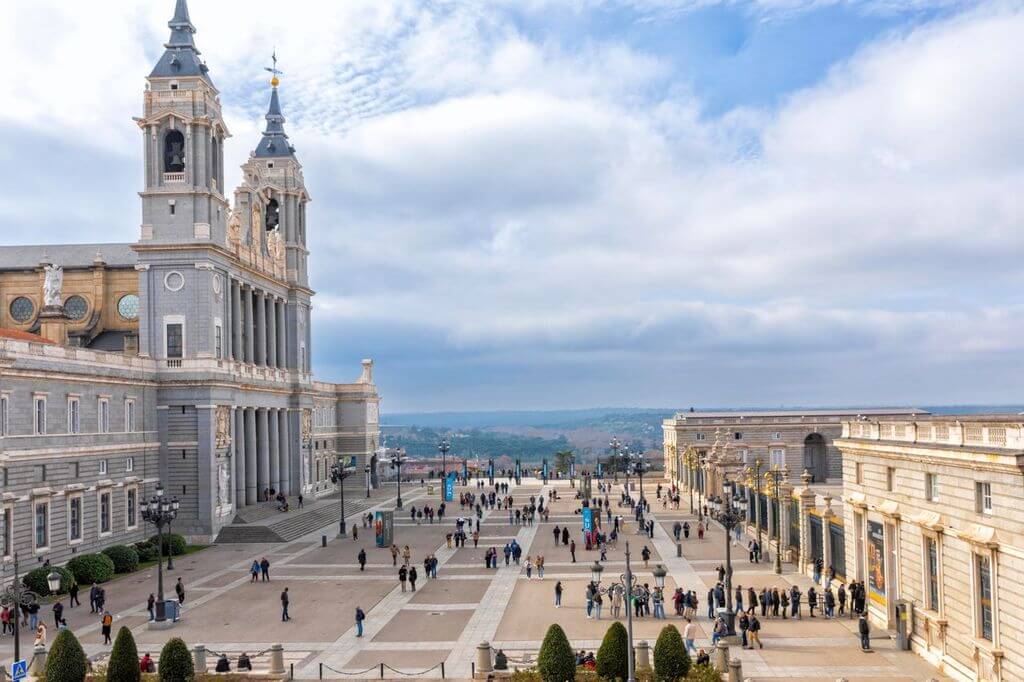
The day concludes at the Almudena Cathedral, situated directly opposite the palace facade. Construction on the cathedral commenced in the late 19th century under the architectural direction of Francisco de Cubas, but due to interruptions caused by the Spanish Civil War and funding deficits, the Neo-Classical exterior and Neo-Gothic interior were not finalized until 1993, when it was consecrated by Pope John Paul II. Visitors can explore the Neo-Romanesque crypt supported by over 400 uniquely carved granite columns and ascend the cathedral dome for panoramic views across the western skyline.
Day Three: Gastronomic Evolution and Contemporary Markets
Recognized internationally as a global culinary capital, Madrid’s food culture blends traditional Castilian taverns with avant-garde culinary techniques and international migration influences. Day three focuses on the city’s market infrastructure and dining evolution.
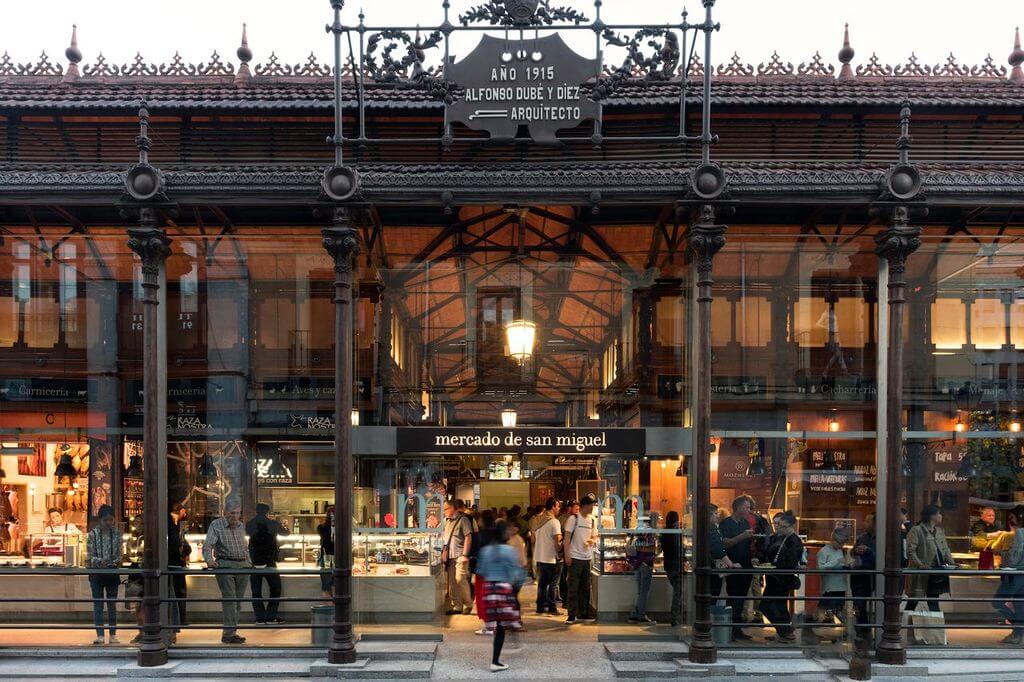
The morning begins at the Mercado de San Miguel, an early 20th-century iron-and-glass structure situated near Plaza Mayor. Transformed into an upscale culinary market, it hosts dozens of specialized stalls offering high-end tapas, artisanal cheeses, Iberian ham, and regional wines. For a more residential, less commercialized experience, urban planners recommend visiting the Mercado de San Antón in the Chueca district or the Mercado de Vallehermoso in Chamberí, both of which retain strong neighborhood identities and showcase produce vendors alongside modern fusion food stalls.
For evening dining, food historians and culinary tourists frequently seek out Sobrino de Botín, certified by Guinness World Records as the oldest continuously operating restaurant in the world, having opened its doors in 1725. Renowned for its traditional Castilian roast suckling pig (cochinillo asado) and roast lamb prepared in original wood-fired ovens, the establishment gained literary renown through its inclusion in Ernest Hemingway’s 1926 novel The Sun Also Rises. Alternatively, travelers engage in informal tapas crawls through the historic alleys of La Latina or the literary quarter, Barrio de las Letras.
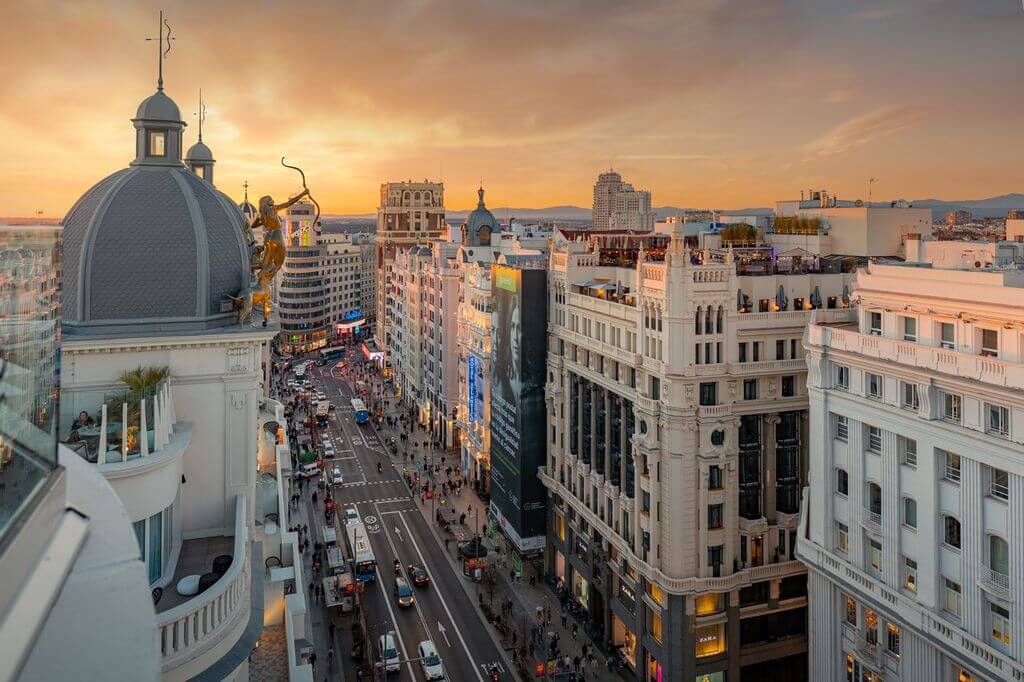
Urban night culture extends vertically along the central thoroughfare of Gran Vía. In recent decades, Madrid has capitalized on its favorable climate by developing an extensive rooftop bar and dining culture. Venues such as the rooftop terrace at the RIU Plaza España (offering 360-degree views from the 27th floor) and Picalagartos in the Hotel NH Collection provide panoramic vistas of the capital’s architectural profile. Furthermore, demographic shifts and dietary diversification have propelled Madrid into a leading European hub for plant-based cuisine, with vibrant vegan and vegetarian establishments concentrated in the counter-cultural Malasaña and Chueca neighborhoods.
Day Four: Monumental Day Trips Within the Community of Madrid
While the urban center offers dense historical exploration, the broader Community of Madrid contains several UNESCO World Heritage sites accessible within a one-hour radius by car or regional commuter rail (Cercanías). Day four is dedicated to regional excursions that highlight imperial architecture and Spanish Golden Age literature.
The first primary option is the Royal Monastery of San Lorenzo de El Escorial, located approximately 50 kilometers northwest of the capital at the foot of the Sierra de Guademar mountains. Commissioned by King Philip II in the 16th century to commemorate the Spanish victory at the Battle of St. Quentin, the massive granite complex served as a political center for the Spanish Empire, a monastery for the Order of St. Jerome, a royal mausoleum, and a humanist library. Architectural historians note that El Escorial’s austere Herrerian design reflects the strict Counter-Reformation ideals and ascetic personality of Philip II, standing in sharp contrast to the ornate Baroque palaces of later eras.
A secondary regional destination is the Royal Palace and Gardens of Aranjuez, situated 50 kilometers south of Madrid along the Tagus River. Designated as a UNESCO Cultural Landscape, Aranjuez served as the spring residence for the Spanish royal family. Originally established as a royal hunting lodge in the 16th century and subsequently expanded by successive monarchs, the palace integrates French and Italian landscape design principles with elaborate interior porcelain chambers, most notably the Salón de Porcelana.
Alternatively, travelers interested in literary history visit Alcalá de Henares, located 35 kilometers northeast of Madrid. As the birthplace of Miguel de Cervantes, author of Don Quixote, and the historic home of the Complutense University founded by Cardinal Cisneros in 1499, the city preserves a pristine urban layout from the Spanish Golden Age (1492–1659), earning independent UNESCO recognition for its university and historic precinct.
Day Five: Hidden Monasteries and Urban Green Spaces
The final day of the itinerary directs attention toward secluded architectural gems and expansive natural conservation areas within the municipal boundaries, allowing visitors to experience the city away from high-traffic commercial corridors.
The morning itinerary explores cloistered religious architecture at the Monastery of Las Descalzas Reales and the Royal Monastery of La Encarnación. Founded in 1559 by Joanna of Austria, daughter of Emperor Charles V, Las Descalzas Reales occupies a 16th-century Renaissance palace where aristocratic women who took religious vows resided, bringing significant dowries, tapestries, and fine art with them. Consequently, the active convent preserves a private collection of Renaissance and Baroque art, including works by Titian, Bruegel the Elder, and Zurbarán. Nearby, the Royal Monastery of La Encarnación, founded in 1611 by Queen Margaret of Austria, wife of Philip III, features a restrained exterior concealing a lavishly decorated interior filled with polychrome sculptures, relics, and religious frescoes.
To conclude the five-day journey, the itinerary moves to Casa de Campo, the largest public park in Madrid. Spanning approximately 1,725 hectares (6.5 square miles)—making it more than five times the size of New York’s Central Park—the park was established in 1931 following the fall of the monarchy, when the former royal hunting estate was transferred to public ownership. The park features an artificial lake (Lago de la Casa de Campo), extensive cycling and walking trails, and several lakeside dining terraces. Urban planners and local residents frequent these terraces to observe the sunset over the water, framing a distant view of the Royal Palace and the Almudena Cathedral across the Manzanares River valley.
Economic and Tourism Implications
Tourism officials project that structured itineraries emphasizing regional dispersion and cultural engagement help mitigate overtourism pressures in primary historical squares while supporting local small-and-medium enterprises across diverse neighborhoods. By encouraging visitors to venture beyond traditional commercial zones into areas like Chamberí, Tetuán, and regional municipalities such as El Escorial and Aranjuez, municipal economic strategies aim to distribute tourism revenue more equitably across the broader metropolitan economy.
As Madrid continues to position itself as a premier European aviation, cultural, and financial hub, balancing infrastructural expansion with historic preservation remains a central priority for city administrators. Analysts suggest that the ongoing promotion of diverse urban assets—spanning classical art, contemporary cuisine, botanical heritage, and imperial architecture—ensures Madrid’s sustained competitiveness in the global tourism market.