
The international juggling and circus communities are mourning the loss of Judy Finelli, a pioneering figure whose contributions fundamentally shaped modern performance arts in North America. Finelli, whose decades-long career spanned elite competition, organizational leadership, artistic direction, and transformative pedagogy, passed away on September 16, 2026, at the age of 78. Her death marks the end of an era for the contemporary circus movement, yet her profound influence endures through the institutions she helped build, the artists she mentored, and the historical barriers she dismantled.

Main Facts and Personal Background
Born in Jackson Heights, New York, in 1948, Finelli discovered a lifelong passion at an exceptionally early age, teaching herself to juggle by the time she was six years old. This early fascination evolved into a rigorous artistic pursuit. She enrolled in the prestigious New York University (NYU) Tisch School of the Arts, graduating in 1970. During her time at NYU, she studied under renowned circus teacher Hovey Burgess, with whom she would forge a profound personal and professional partnership, later marrying him before their paths eventually led to other chapters.

Finelli’s career was defined by a series of historic "firsts" that challenged the male-dominated paradigms of the circus and juggling worlds. In 1973, she made history as the first woman to compete in the International Jugglers’ Association (IJA) championships. That same year, she broke further ground by assuming the presidency of the IJA, serving a transformative term from 1973 to 1974 and becoming the organization’s first female president. Her administrative contributions matched her performance milestones; she was a frequent and insightful contributor to the IJA Newsletter, documenting the burgeoning community and providing critical commentary on the state of the art form.

Chronology of a Legendary Career
Finelli’s artistic timeline is a testament to relentless innovation and collaboration across multiple decades:

- 1948: Born in Jackson Heights, New York.
- 1954: Self-taught in the fundamentals of juggling at age six.
- 1970: Graduates from the NYU Tisch School of the Arts.
- 1973: Becomes the first woman to compete in the IJA championships and begins her tenure as the first female president of the IJA.
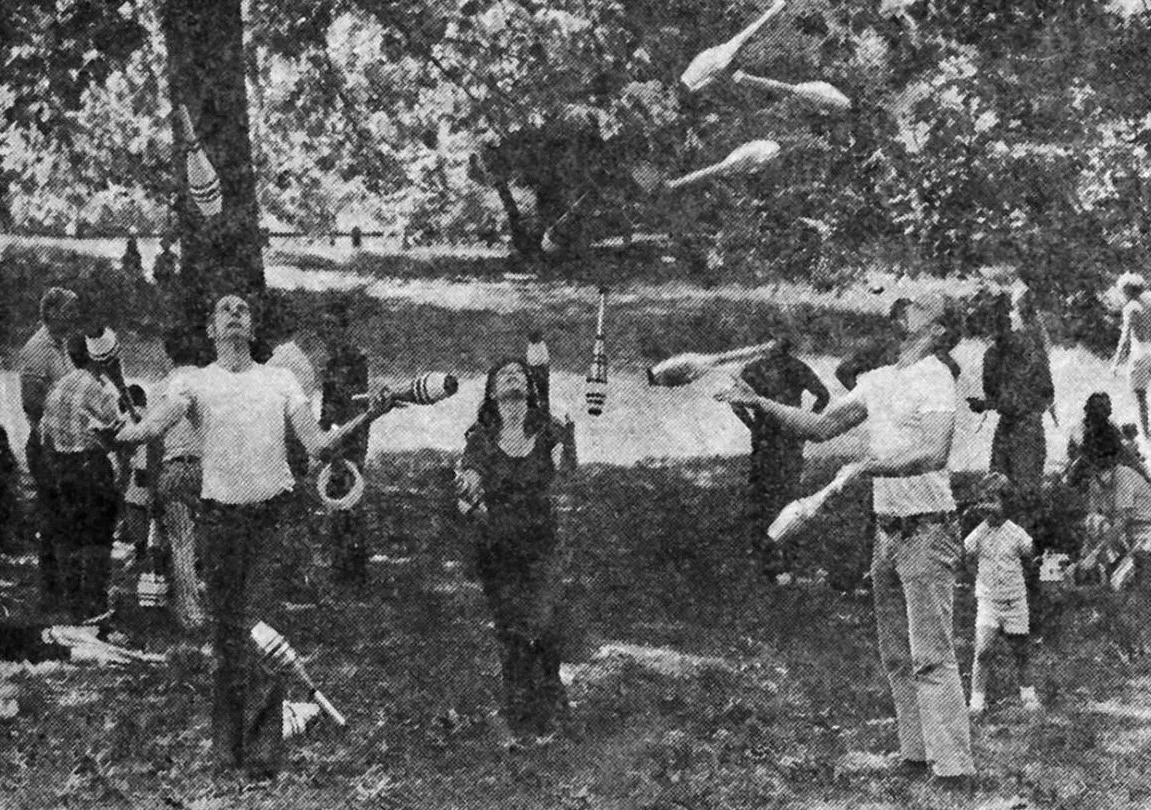
- 1976: Achieves a milestone by passing eight clubs with Jessica Hentoff at the IJA Festival in Los Angeles.
- 1977: Along with Hovey Burgess, becomes the first American duo to successfully pass ten clubs—a monumental technical achievement at the time.
- 1984: Co-founds the San Francisco School for Circus Arts (now known as the Circus Center of San Francisco) alongside Wendy Parkman.
- 1987–1990: Serves as the artistic director of the legendary Pickle Family Circus, steering its creative vision and introducing foundational pedagogical shifts.
- 1989: Diagnosed with multiple sclerosis (MS), prompting her retirement from active performance; she immediately transitions into a celebrated role as a full-time coach, teacher, and mentor.
- 2023: Receives the IJA’s prestigious Bobby May Award, honoring her legacy as a world-class juggling mentor and coach.
- September 16, 2026: Passes away at age 78, leaving behind her husband, Gary Thomsen, and daughter, Allegra Burke.
Technical Prowess and Contributions to Circus Pedagogy
Beyond her administrative leadership, Finelli was an elite technician. In an era when female performers were frequently relegated to novelty acts or supporting roles, Finelli stood shoulder-to-shoulder with the best technicians in the world. Her technical achievements included passing eight clubs with Jessica Hentoff in 1976 and, alongside Hovey Burgess in 1977, achieving the historic milestone of being the first American duo to pass ten clubs. Her talents extended beyond the physical stage into mainstream media; she made numerous television and film appearances, most notably featuring in the 1980 cinematic adaptation of Popeye, directed by Robert Altman and starring Robin Williams.

Perhaps her most enduring institutional legacy lies in her educational vision. In 1984, Finelli co-founded the San Francisco School for Circus Arts, establishing a domestic pipeline for professional circus training that had previously required artists to look exclusively to European or Soviet institutions. As artistic director of the Pickle Family Circus from 1987 to 1990, she orchestrated a pivotal cultural exchange by bringing Master Teacher Lu Yi to the United States. This introduction of rigorous Chinese acrobatic pedagogy to American performers revolutionized North American contemporary circus, laying the groundwork for world-renowned companies such as Cirque du Soleil and The 7 Fingers.

Furthermore, Finelli was an intentional architect of equity. Long before institutional diversity became a corporate talking point, she actively cast and championed female clowns, jugglers, aerialists, and acrobats—including Karen Quest, Diane Wasnak, Shana Carrol, and Joan Mankin—providing them with professional platforms that fundamentally altered the demographic landscape of American theater and circus.

Transition to Mentorship and the Battle with Multiple Sclerosis
In 1989, at the height of her professional career, Finelli received a diagnosis of multiple sclerosis. The progressive neurological condition eventually forced her retirement from physical performance, placing her in a wheelchair and later resulting in quadriplegia. However, those who knew her emphasize that the disease failed to diminish her intellect, her wit, or her passion for the arts.

Refusing to step away from the community she loved, Finelli reinvented herself as an indispensable coach and mentor. Operating from her wheelchair with the steadfast support of her local community—affectionately dubbed "The Judy Club" or practitioners of "Judyism"—she continued to teach at institutions such as the San Francisco Clown Conservatory and the Prescott Circus Theater well into her later years. Her sharp analytical eye, encyclopedic memory of circus history, and compassionate communication style made her a sought-after advisor for generations of performers. In recognition of this decades-long pedagogical impact, she was honored with the IJA’s Bobby May Award in 2023. Her life and enduring resilience are also chronicled in the post-production documentary Still Judy.

Official Responses and Community Tributes
The announcement of Finelli’s passing prompted an outpouring of grief and admiration from across the global performance community, highlighting her profound personal and professional reach.

Fellow juggler and historian Dan Holzman reflected on her enduring spirit: "Judy Finelli was a juggler at heart, and even after MS took away her ability to perform, it never touched her love for the art form. She faced a long, difficult battle with grace, turning what many would see as an ending into a different kind of beginning—as a teacher, a mentor, and a generous champion for so many other performers. Those of us who knew her knew that spark never dimmed."

Circus artist and educator Cindy Marvell underscored Finelli’s generosity: "Judy Finelli was generous with her time advising many about circus arts before and after her illness with multiple sclerosis. She took on the tragedy in ways inspiring to us all. She was an excellent writer reviewing many shows and a true pioneer for women in our field."

Jessica Hentoff, who famously shared an eight-club passing record with Finelli in 1976, detailed the breadth of her impact: "Judy Finelli was one of the most wonderful women I know… She never stopped learning, sharing, or helping. Thank you, Judy Finelli, for inspiring a multitude of people in a myriad of ways. Your effect on the circus world is immeasurable!"

Karen Quest, a student and colleague whose career was directly launched by Finelli’s advocacy, noted the deep bonds of the community that rallied around her: "As her multiple sclerosis progressed, Judy’s body suffered to the point of quadriplegia, but her beautiful brain never faltered… A dedicated, tight-knit group of her San Francisco circus community would do anything for her… We called ourselves The Judy Club… She was an inspirational visionary whose creativity knew no bounds."

Broader Impact and Industry Implications
Finelli’s passing closes a vital chapter in the history of American circus and juggling, prompting historians and practitioners to evaluate her lasting legacy. Before Finelli and her contemporaries established domestic training facilities and institutional frameworks, American circus arts relied heavily on traditional, itinerant tent shows with limited formalized pedagogy. By co-founding the San Francisco School for Circus Arts and bridging Eastern acrobatic traditions with Western theatrical sensibilities, Finelli helped catalyze the "New Circus" movement in North America.

Her work demonstrated that physical discipline could merge seamlessly with theatrical narrative, while her deliberate elevation of female artists dismantled structural barriers that had persisted for generations. Even as physical disability curtailed her own performance career, her subsequent decades as a coach proved that pedagogical mentorship is just as vital to cultural preservation as physical execution.

As the international juggling community prepares to celebrate her life through memorials, screenings of the upcoming documentary Still Judy, and archival retrospectives, her legacy remains firmly embedded in the community’s DNA. Judy Finelli is survived by her husband, Gary Thomsen, and her daughter, Allegra Burke. Her contributions ensured that the landscape of contemporary performance arts in North America is vastly more inclusive, technically advanced, and artistically rich than she found it.