 admin
admin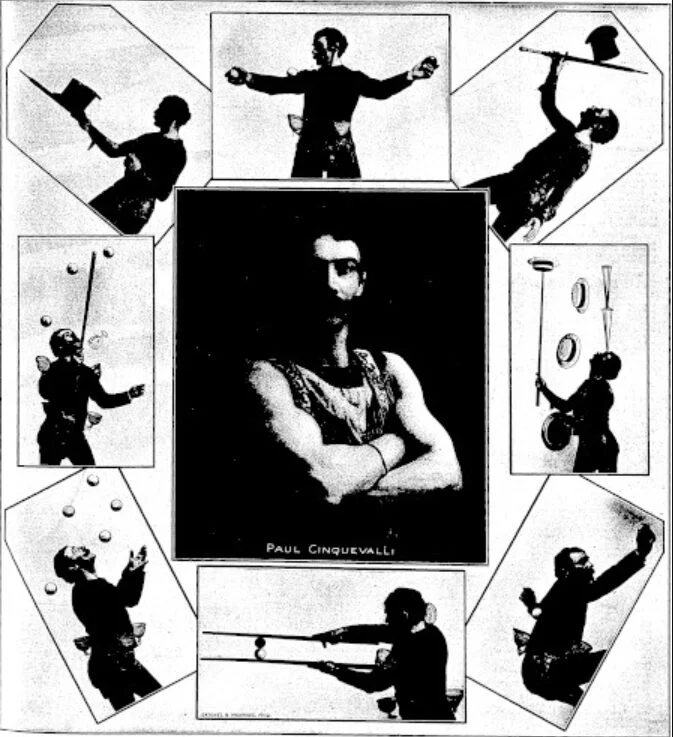
The fascinating world of Paul Cinquevalli, a name synonymous with unparalleled dexterity and showmanship in the late 19th and early 20th centuries, continues to captivate audiences and scholars of performance art. A recently unearthed interview, originally published in The Helena Independent on December 30, 1894, and attributed to a journalist from the Sunday Commercial, provides a rare and intimate glimpse into the mind of this legendary figure. In this extensive conversation, Cinquevalli articulates his profound philosophy on the demanding craft of juggling, emphasizing a unique blend of inherent talent and relentless, almost obsessive, dedication. Far from merely discussing his astounding tricks, the interview delves into his personal journey, the physical and mental rigors of his profession, and his insightful observations on the global landscape of juggling. This historical document not only serves as a testament to Cinquevalli’s extraordinary skill but also offers a valuable window into the rigorous standards and artistic sensibilities that defined the golden age of variety performance.
Early Life and the Path to the Stage
Born in Poland, Paul Cinquevalli’s life began far from the glittering stages where he would later achieve international renown. The son of a "steady going merchant" who subsequently relocated his family to Berlin, young Cinquevalli was exposed to a more conventional path. However, his destiny, as he himself would later attest, was not to follow in his father’s footsteps. From an early age, an innate inclination towards manipulation and balance manifested itself, to the "admiration of [his] playmates." This nascent talent, however, clashed with his father’s expectations, leading to a pivotal moment in the boy’s life. At the tender age of twelve, driven by an unyielding desire to embrace the captivating world of the circus, Cinquevalli made the audacious decision to run away from home. This act of youthful rebellion underscored a profound commitment to his burgeoning artistic calling, a commitment that would define his entire career.

His initial foray into professional performance was not as a juggler, but as a trapeze and aerial performer. For seven formative years, Cinquevalli honed his physical prowess high above the circus ring, a testament to his versatility and fearlessness. The late 19th century was a perilous era for aerialists; safety standards were rudimentary, and the risk of severe injury, or worse, was an ever-present reality. Performers often worked without nets or with minimal protection, relying solely on their strength, agility, and precise timing. It was during this period, at the age of nineteen, that fate intervened dramatically. A catastrophic fall, the precise details of which are not fully elaborated in the interview but can be inferred as life-altering, brought his aerial career to an abrupt and painful halt. The accident confined him to a hospital bed for eighteen grueling months, a period of forced introspection and physical recovery that would ultimately reshape his professional trajectory.
From Aerialist to the World’s Foremost Juggler
The arduous recovery from his fall marked a profound turning point. While the injury closed one chapter of his life, it inadvertently opened another, propelling him towards the art form that would secure his place in history. He channeled his prodigious physical and mental discipline, previously dedicated to aerial acrobatics, into mastering the intricate art of juggling. This transition was not merely a change in discipline but a testament to his indomitable spirit and unwavering artistic drive. By the time of the 1894 interview, at approximately forty years of age, Cinquevalli had not only fully recovered but had also ascended to the pinnacle of his new profession, earning the moniker "the foremost juggler in the world." His physical appearance at the time reflected his dedication: a "form splendidly trained and developed," complemented by a "pleasant, smiling face, adorned with a curling mustache." His extensive travels, a hallmark of top-tier performers of the era, had also endowed him with linguistic fluency, enabling him to converse in "six or seven languages," undoubtedly enhancing his global appeal and understanding of diverse audiences.
The Philosophy of Mastery: Born Talent Meets Unwavering Patience
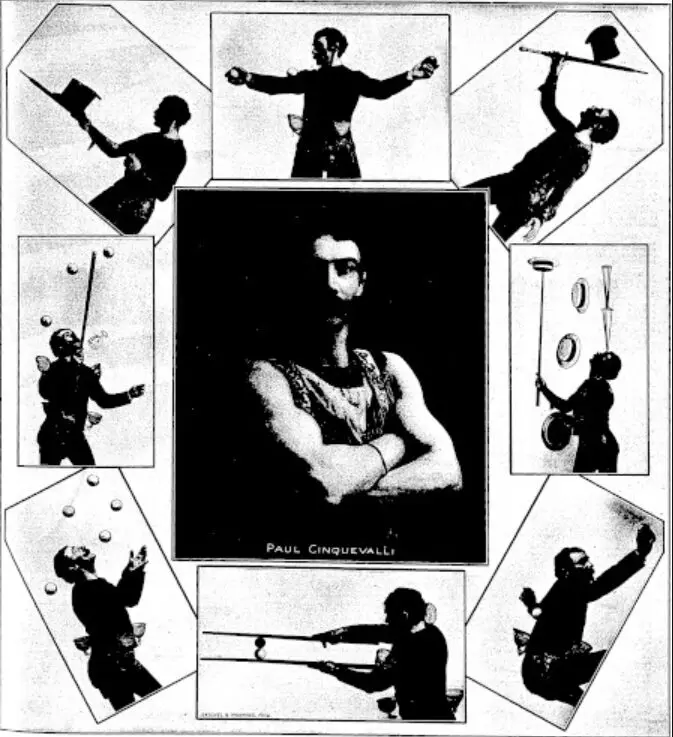
Cinquevalli’s core philosophy, articulated with compelling clarity in the interview, posits that a juggler, "like a poet, must be born, not made." This statement, however, is immediately tempered by a crucial caveat: "All the same, it is not easy to learn the art, even if you are to the manner born." This paradox lies at the heart of his genius – the recognition that innate talent is merely the foundation upon which monumental effort must be built. He emphasized that without "perfect steadiness of nerve; next, unwavering patience; next, a quick and accurate eye, and an equally agile and dexterous hand," even a "born" juggler could not attain success. Furthermore, he added, "Even having these, he must work hard, indeed, to become proficient." This rigorous definition of mastery challenges the notion of effortless genius, instead highlighting a demanding synthesis of natural aptitude and relentless, deliberate practice.
His detailed accounts of learning specific tricks serve as compelling evidence of this philosophy in action. He candidly revealed the extraordinary time commitments required to perfect what might appear to an audience as simple feats:
- The Billiard Ball in Back Pocket: "It took me two years, working probably over an hour every day, on the average, before I was able to do that little trick or tossing a billiard ball in the air and catching it accurately in the pocket fastened to my back." This feat, requiring precise trajectory calculation and unerring body control, underscores the minute attention to detail and repetition inherent in his training.
- The Cue and Billiard Ball Balance: "For seven or eight years I practiced the balancing two billiard balls on the end of a cue and the cue in turn on a hall placed in a cup which I hold in my mouth." This multi-layered balancing act, demanding exceptional stillness and proprioception, illustrates a level of persistence that borders on the obsessive. Giving up "several times" only to return to it exemplifies the "unwavering patience" he deemed essential.
- Juggling Cigar Holders: "I do a trick in juggling cigar holders held in my mouth, which looks quite simple, I have no doubt. It took me over two years to learn that." This seemingly minor detail reveals that even the most subtle and elegant manipulations required years of dedicated practice.
- The 48-Pound Steel Ball: Perhaps the most dramatic example of his dedication and the inherent risks of his profession was the mastery of the 48-pound steel ball. "While I was learning the way to catch the 48-pound steel ball which I throw in the air and balance on my neck, I had several mishaps. Once the ball knocked me senseless and I lay unconscious for over an hour. It took years to master that feat perfectly." This anecdote is chilling, highlighting the sheer physical danger and mental fortitude required for such acts. The incident of being knocked unconscious underscores the fine line between triumph and severe injury, a risk that Cinquevalli was willing to embrace in his pursuit of perfection.
Cinquevalli’s practice regimen was equally illuminating. He stated that once a trick was "learned perfectly," stage performances were sufficient to "keep me in trim." However, the pursuit of novelty was constant: "but I am constantly at work several hours a day on new feats." This continuous innovation, coupled with the meticulous refinement of existing skills, positioned him at the forefront of his art. He consciously sought "the most unusual implements I can find," striving to make his feats "as novel and difficult as possible," a clear indication of his ambition to push the boundaries of juggling.
The Juggler’s Lifestyle and Global Perspectives

Beyond the technical aspects of his craft, Cinquevalli also offered insights into the lifestyle conducive to a performer of his caliber. When questioned about drinking and smoking, his response reflected a pragmatic moderation: "Drinking and smoking in great moderation are not tabooed… but he must be very careful not to do either to an excess which may affect his nerves. I smoke two or three cigarettes a day and take a drink or two, but never more." This controlled approach stands in contrast to the often-romanticized, sometimes self-destructive, image of performers in the late 19th century. His emphasis on nerve steadiness underscored the delicate balance required for his intricate acts, where even a slight tremor could mean failure.
His observations on national characteristics in juggling were equally revealing. When asked which nation produced the best jugglers, he unequivocally stated, "The Japanese, undoubtedly." He praised their "wonderfully patient and agile" nature, qualities he himself embodied. However, he quickly added a critical distinction: "But they are not original. They use only the same properties their forefathers used, and do the same time-worn feats. They have no invention in their art." This assessment highlights a fascinating cultural divergence: while Japanese traditions emphasized the perfection of inherited forms, Cinquevalli, a product of European innovation, valued originality and the constant creation of new challenges. For Caucasian jugglers, he found "not much to choose," concluding that "Different nationalities possess various necessary qualifications, and the union of them all may occur in one country as well as another. It is the man, not the nationality he belongs to." This enlightened perspective, emphasizing individual talent and dedication over national origin, resonates with a universal understanding of artistic merit.
The Context of Vaudeville and Variety Performance
Paul Cinquevalli’s career flourished during a vibrant era of entertainment, often referred to as the golden age of vaudeville and variety shows. Venues like Koster & Bial’s, where Cinquevalli was a featured act at the time of the interview, were grand palaces of entertainment, offering diverse programs that included magicians, acrobats, comedians, singers, and specialty acts like juggling. These shows were a primary form of mass entertainment, attracting vast audiences and providing a platform for performers to achieve celebrity status. The competitive nature of vaudeville demanded constant innovation and increasingly complex acts, pushing artists like Cinquevalli to continually refine their craft and invent new spectacles. His ability to perform intricate feats with unusual objects, combined with his charismatic stage presence, made him a star attraction in this demanding environment. The sheer physical demands of a vaudeville performer’s life, involving constant touring, multiple daily performances, and the pressure to deliver flawless shows, further underscore Cinquevalli’s exceptional endurance and professionalism.

Legacy and Enduring Influence
Paul Cinquevalli’s impact on the art of juggling extends far beyond his lifetime. He is widely considered one of the pioneers of modern juggling, pushing the boundaries of what was thought possible with human dexterity and balance. His candid interviews, like the one from The Helena Independent, played a crucial role in demystifying the art while simultaneously enhancing his legendary status. By articulating his philosophy and detailing the immense effort behind his "effortless" performances, he elevated juggling from a mere novelty act to a respected discipline requiring profound dedication.
His emphasis on originality and the relentless pursuit of new feats influenced subsequent generations of jugglers. Performers today continue to draw inspiration from his innovative spirit and his rigorous approach to practice. The stories of his perseverance, particularly his recovery from a devastating accident and his years-long commitment to perfecting a single trick, serve as enduring lessons in resilience and artistic integrity. Further insights into his life and methods can be gleaned from other historical accounts, such as "How to Succeed as a Juggler by Paul Cinquevalli," which likely offered practical advice, and "Confessions of Paul Cinquevalli," potentially revealing more personal reflections. Even records like "Cinquevalli in Court" suggest a public figure whose life sometimes intersected with legal or social affairs, adding to the richness of his documented history.
In conclusion, Paul Cinquevalli was more than just a juggler; he was a philosopher of performance, a living embodiment of the adage that talent is nurtured by tireless effort. His 1894 interview provides a timeless testament to the profound discipline, innovative spirit, and unwavering patience required to achieve true mastery in any art form. His legacy is not merely in the incredible feats he performed but in the intellectual framework he provided for understanding the true nature of artistic excellence—a synthesis of innate gift, relentless training, and an unquenchable thirst for innovation. His story continues to inspire, reminding us that behind every seemingly effortless display of genius lies a lifetime of dedicated toil and an unyielding passion for perfection.