 admin
admin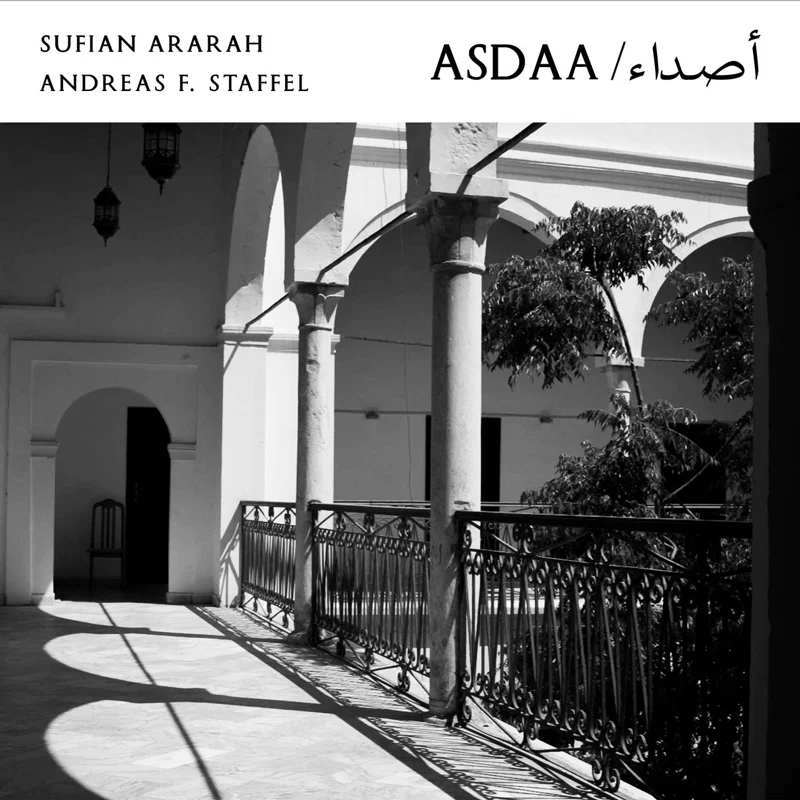
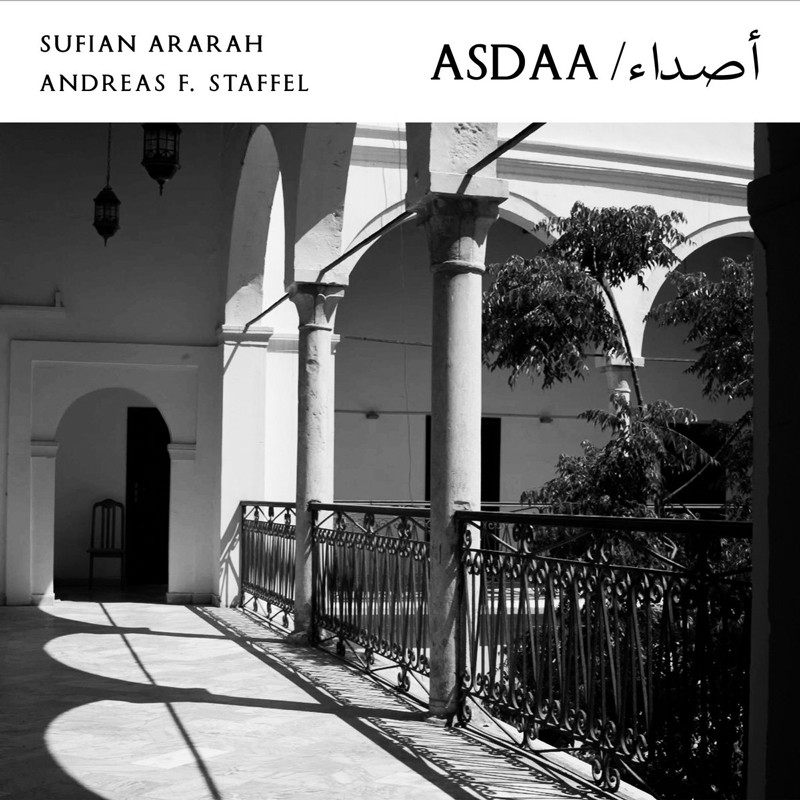
The contemporary music scene in Berlin has been further enriched by the release of "Asdaa" (أصداء), a collaborative composition by the Libyan oud virtuoso Sufian Ararah and the German pianist and composer Andreas F. Staffel. This new work, whose title translates to "Echoes," represents a sophisticated dialogue between the microtonal traditions of the Arab world and the structured harmonic frameworks of Western classical and contemporary music. Ararah, a Tripoli-born artist now based in Germany, has utilized this project to explore the profound themes of memory, displacement, and the architectural resonance of spaces that have been lost to time or conflict. By blending Middle Eastern maqamat with North African rhythmic structures and Mediterranean melodic sensibilities, "Asdaa" serves as a precursor to Ararah’s highly anticipated debut album, Wijdan, which seeks to redefine Libyan musical heritage within a global, contemporary context.
The Artistic Vision Behind Asdaa
The genesis of "Asdaa" lies in the shared curiosity of Ararah and Staffel regarding how disparate musical languages can coexist without losing their individual identities. For Ararah, the oud is not merely an instrument but a vessel for cultural memory. In "Asdaa," the oud provides the emotional and melodic core, utilizing the traditional Arabic maqam system—a complex system of melodic modes that includes quarter-tones not found in Western chromatic scales.
Andreas F. Staffel, an accomplished pianist and composer known for his experimental and cross-genre works, provides a harmonic counterpoint that avoids the typical "orientalist" tropes often found in fusion music. Instead of merely accompanying the oud, the piano in "Asdaa" acts as a reflective surface, creating the "echoes" suggested by the title. The composition utilizes the spatial qualities of sound, where the decay of a piano note meets the resonant, fretless slide of the oud string, simulating the acoustics of ancient North African courtyards and arched corridors. This thematic focus on "spaces that no longer exist" resonates deeply with the Libyan diaspora, offering a sonic meditation on a homeland that has undergone significant transformation over the past decade.
Biographical Context: Sufian Ararah’s Journey from Tripoli to Berlin
Sufian Ararah’s emergence as a significant voice in the European "world music" and contemporary scene is rooted in his upbringing in Tripoli, Libya. Libya possesses a unique musical landscape that remains relatively under-explored in the West compared to its neighbors, Egypt and Tunisia. Ararah’s style is heavily influenced by the Libyan Ma’luf—a genre of Andalusian music that traveled across North Africa—as well as the rhythmic vitality of Bedouin music and the urban sounds of Tripoli.
After relocating to Berlin, Ararah found himself at the heart of one of the world’s most diverse creative hubs. Berlin has increasingly become a sanctuary and a laboratory for artists from the Middle East and North Africa (MENA) region. This migration has led to the birth of new sub-genres that blend traditional instruments with jazz, electronic, and avant-garde influences. Ararah’s work is a primary example of this "Berlin Sound," where the preservation of heritage is not seen as a static act but as a dynamic, evolving process. His collaboration with Staffel is a testament to this environment, where the boundaries between "Western" and "Eastern" music are continuously blurred through mutual technical respect and intellectual inquiry.
Technical Analysis of the Fusion
The technical achievement of "Asdaa" rests on the integration of the oud and the piano, two instruments with fundamentally different tuning systems. The piano is a fixed-pitch instrument, usually tuned to equal temperament, while the oud is a fretless instrument capable of producing the subtle inflections of maqamat.
In "Asdaa," the composers navigate this challenge by selecting modes that find common ground between the two systems or by allowing the piano to explore dissonant, atmospheric textures that complement the oud’s melodic freedom. The rhythmic foundation of the piece draws from North African traditions, which often feature complex, cyclical patterns that differ from the linear progression of much Western music. By placing these rhythms in a contemporary setting, Ararah and Staffel create a sense of "timelessness," where the ancient and the modern occupy the same acoustic space.
This collaboration also highlights the role of the oud as a lead instrument in contemporary chamber music. Traditionally an ensemble instrument or a solo vehicle for taksim (improvisation), the oud in Ararah’s hands becomes a bridge to modernism. His ability to weave Mediterranean melodies—reminiscent of the shared history of the sea-faring cultures of Italy, Greece, and North Africa—adds a layer of accessibility to the work while maintaining its experimental edge.
Chronology and Future Projects: The Road to Wijdan
The release of "Asdaa" marks a pivotal moment in Sufian Ararah’s professional timeline. While he has been a consistent performer in the European circuit, this composition serves as a formal introduction to his broader artistic philosophy. The timeline of his recent activities suggests a deliberate move toward large-scale conceptual projects:
- Relocation and Integration (Pre-2020): Ararah establishes himself in the Berlin music scene, collaborating with various international artists and exploring the intersection of Libyan folk and contemporary jazz.
- Conceptualization of Asdaa (2022-2023): Working with Andreas F. Staffel, Ararah begins composing "Asdaa," focusing on the concept of "echoes" as a metaphor for the immigrant experience and historical memory.
- The "Asdaa" Release (2024): The piece is introduced to the public via digital platforms and teasers, garnering attention for its unique instrumentation and atmospheric depth.
- Development of Wijdan (Ongoing): Ararah is currently in the production phase of his debut album, Wijdan. This project is expected to expand on the themes found in "Asdaa," incorporating Middle Eastern jazz and broader world music traditions.
Wijdan, an Arabic term often translated as "ecstasy," "sentiment," or "inner soul," suggests that the upcoming album will be a deeply personal exploration of Ararah’s identity. It aims to place Libyan heritage in a "dialogue with wider musical forms," potentially involving larger ensembles and more diverse instrumentation.
Broader Implications for Libyan Cultural Heritage
The work of Sufian Ararah carries significant weight beyond its aesthetic value. Libya’s cultural heritage has faced immense challenges due to political instability and conflict over the last decade. Many traditional musical forms have been at risk of being lost, and the international perception of Libyan culture has often been overshadowed by political narratives.
Artists like Ararah serve as cultural ambassadors, ensuring that the richness of Libyan music is not only preserved but allowed to flourish in new environments. By bringing Libyan maqamat to a contemporary Berlin audience, he is effectively "de-territorializing" the music—taking it out of a specific geographic conflict zone and placing it in a global intellectual space. This act of cultural preservation through innovation is vital for the survival of minority or under-represented musical traditions.
Furthermore, "Asdaa" contributes to the growing body of work that utilizes music as a tool for "spatial memory." In the field of ethnomusicology, there is an increasing interest in how sound can recreate the feeling of a place that is physically inaccessible. For those in the Libyan diaspora, the "echoes" in Ararah’s music may evoke the specific atmosphere of Tripoli’s Old City or the vast landscapes of the Sahara, providing a sense of continuity and belonging.
Critical Reception and Collaborative Impact
While "Asdaa" is a relatively new release, it has already been noted by world music specialists for its restraint and elegance. Unlike many fusion projects that rely on high-energy "world-beat" tropes, "Asdaa" is contemplative and minimalist. This approach has allowed the intellectual depth of the composition to shine through, appealing to fans of both contemporary classical music and traditional Arabic music.
The partnership with Andreas F. Staffel has been instrumental in this reception. Staffel’s expertise in Western composition provides a structural rigor that complements Ararah’s fluid improvisational style. Their collaboration is a model for cross-cultural artistic exchange, characterized by a "horizontal" relationship where neither tradition is subordinated to the other. Instead, they meet in a "third space"—a musical territory that belongs to neither Tripoli nor Berlin exclusively but is a product of their intersection.
Conclusion: A New Chapter in Mediterranean Music
As Sufian Ararah continues to develop his debut album Wijdan, the release of "Asdaa" stands as a significant milestone in his career and a noteworthy contribution to the genre of contemporary world music. Through his mastery of the oud and his visionary approach to composition, Ararah is bridging the gap between the past and the present, the local and the global.
The composition "Asdaa" is more than just a piece of music; it is a sonic investigation into the nature of memory and the persistence of culture across borders. By channeling the "echoes" of his heritage through the lens of modern experimentalism, Ararah and Staffel have created a work that is both timely and timeless. As the global music community looks toward the release of Wijdan, Ararah’s work serves as a reminder of the power of music to transcend boundaries, reclaim lost spaces, and forge new identities in an ever-changing world.