 admin
admin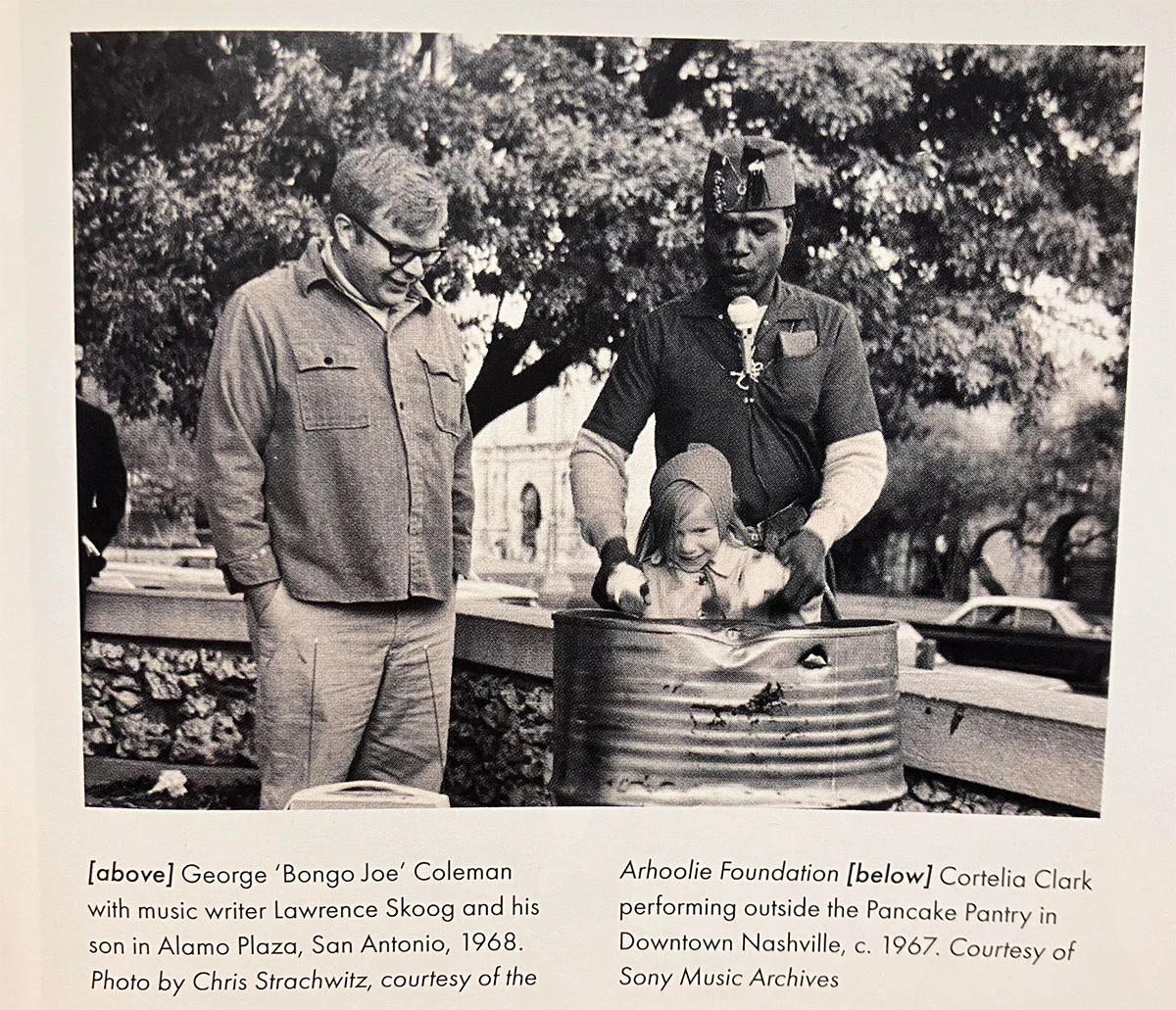
George "Bongo Joe" Coleman, a profoundly original street musician, carved an indelible niche in American musical folklore through his singular performances on the streets of San Antonio. Far from the conventional image of a busker, Coleman transcended typical instrumentation, employing a 55-gallon oil drum as his primary percussive tool while simultaneously singing, speaking, whistling, and engaging in witty, often bawdy, banter. His unique style and compelling stage presence solidified his reputation as an "American primitive" artist, whose legacy continues to resonate within the cultural landscape of Texas and beyond.
Born on November 28, 1923, in Haines City, Florida, Coleman’s early life was marked by hardship, having been orphaned at a young age. He spent his formative years in Detroit, a city with a rich musical heritage, where he first dipped his toes into the world of performance. Early experiences included a brief stint with the legendary Sammy Davis Jr., providing a glimpse into his nascent musical talent and his association with established entertainers. By the 1940s, Coleman had migrated south, settling in Houston, where he honed his percussive skills as part of a local ensemble. However, it was the call of the streets that truly defined his artistic trajectory. He embraced busking, first in Houston, then Galveston, before finding his spiritual and artistic home in San Antonio.
The San Antonio Scene: A Hub for an Unconventional Talent
San Antonio’s bustling RiverWalk, a vibrant network of walkways along the San Antonio River, became Bongo Joe’s unofficial stage. His performances were a fixture near iconic locations such as the site of HemisFair ’68, a world’s fair that drew millions of visitors to the city, and the now-defunct Joske’s department store. These high-traffic areas provided a constant stream of tourists and locals, exposing a diverse audience to his distinctive sound. Coleman’s setup was as unconventional as his music: in addition to his signature oil drum, he sang through a pickup microphone connected to a small amplifier, ingeniously powered by car batteries, ensuring his powerful voice and rhythmic beats carried through the urban din.
Jim Beal Jr., a revered music reporter who covered the San Antonio Express-News for nearly a quarter-century, frequently encountered Bongo Joe during his teenage years. Beal’s recollections paint a vivid picture of Coleman’s commanding presence. "He was outrageous, loud and sometimes reminded me of the classic rodeo clown with mismatched kind of clothing. He was a statement of something," Beal recalled. "He was a showman — and he was pretty darn good percussionist." Beal further highlighted Coleman’s subtle musical sophistication, noting a revelation from a bandmate: "You know, Bongo Joe always whistles in a minor key." This observation underscored the depth of musicality beneath the seemingly raw, improvised exterior.
Coleman’s daily commute to his performance spots was another testament to his unique character. Eschewing cars or vans, he would transport his cumbersome oil drums and equipment on a small motorcycle, described by Beal as "somewhere between a moped and a bicycle," ingeniously jerry-rigged to carry his gear. He resided in a tourist court, a type of stand-alone motel common in the era, located a mere ten to fourteen blocks from his downtown performance area. Beal characterized him as a "living tourist attraction," likening him to other iconic street performers found in places like Fisherman’s Wharf or New Orleans’ French Quarter, yet emphasizing that Bongo Joe’s act was more an incidental encounter for passersby than a destination performance. "You would encounter him on the way to a river block bar or tourists walking around, back and forth from the Alamo to their hotels, and that part of town was a big tourist attraction. So you would see him. He was just there."
The Genesis of the Oil Drum and Jazz Influences
In an interview with San Antonio musicologist Larry Skoog for the Arhoolie Foundation’s website, Coleman, a man of few words in conversation, revealed the practical origins of his unusual instrumentation. In the early 1950s, struggling to secure a drumming job without his own set, and unable to obtain a loan for conventional drums, he improvised. "I got some cans and fixed them up like drums and started playing on street corners in Houston," he explained. This act of necessity birthed an iconic sound.
Despite his seemingly "primitive" approach, Bongo Joe possessed a deep appreciation for sophisticated musical forms, particularly jazz. His list of musical heroes, as shared with Skoog, reads like a who’s who of jazz giants: Dave Brubeck, Stan Kenton, Erroll Garner, Fats Waller, Chick Webb, Gene Krupa, Duke Ellington, Johnny Hodges, Flip Phillips, and Dizzy Gillespie. This eclectic taste reveals a lucid context for his own artistry, suggesting that his unconventional expression was not born of ignorance but rather a unique interpretation of profound musical traditions.
The Arhoolie Recording: Capturing a Street Legend
A pivotal moment in Bongo Joe’s career came in 1968 when Chris Strachwitz, the visionary founder of Arhoolie Records, a legendary label renowned for documenting blues, folk, and roots music, traveled to San Antonio specifically to record him. The resulting LP, Bongo Joe’s only official album, captured the raw energy and distinctive charm of his street performances. AllMusic, a prominent music database, lauded the album as both "hilarious" and "edgy," highlighting its unique appeal. One track, "Innocent Little Doggie," transcended its street origins to become an underground radio classic, gaining traction in both Texas and the United Kingdom, attesting to its universal appeal.
Strachwitz, reflecting on the recording years later in a 2022 feature for the San Antonio Current, remarked on the initial perception of Coleman: "Nobody took him seriously. He was just a street entertainer. But he was absolutely brilliant." This sentiment underscores the cultural significance of Arhoolie Records’ decision to document Bongo Joe, elevating a street performer to the esteemed company of other American roots music icons. Jim Beal Jr. further affirmed the album’s authenticity, stating, "The melody line was his vocals. And he was just banging on the drums, and whistling and then some singing. What you heard on that here on that record is exactly what he did. He was what you might have called an American primitive." The term "American primitive" in this context refers to a style of art or music that is self-taught, often outside mainstream conventions, and characterized by a raw, unpolished, yet deeply expressive quality. Bongo Joe perfectly embodied this artistic philosophy, crafting complex narratives and rhythms from the simplest of means.
Beyond the Streets: National Recognition and Legal Encounters
The intrigue surrounding his Arhoolie album led to Bongo Joe occasionally performing beyond the confines of San Antonio. Notably, he became a recurring performer at the prestigious New Orleans Jazz & Heritage Festival for nine years, a significant achievement for any musician, let alone a street artist. In a surprising turn, he even accompanied Dizzy Gillespie, one of his jazz heroes, as a pianist during one of these appearances. Jim Beal Jr. vividly recalled his astonishment upon witnessing this: "What the heck," he thought, "I travel all the way from San Antonio to New Orleans. And there’s Bongo Joe playing at New Orleans JazzFest!" This anecdote illustrates the depth of his musical versatility and the respect he garnered from his peers, despite his unconventional public persona. His reach even extended into the political sphere, as he performed at several stops along Gerald Ford’s presidential campaign trail in 1976, showcasing his appeal to a broad American audience.
However, Coleman’s life was not without its dramatic turns and brushes with the law, highlighting the precarious existence of street performers. In 1978, Bongo Joe inadvertently became a local hero by assisting authorities in apprehending an alleged shoplifter. As detailed in a 2017 San Antonio Express-News story by Josh Baugh, referencing an April 1, 1978, article from the same newspaper, the incident unfolded with Coleman’s characteristic ingenuity. After a suspect fled a jewelry store, threatening a worker with a knife, Bongo Joe pulled up on his moped next to a patrol car and inquired about the commotion. Informed that the man was a robbery suspect, Coleman took matters into his own hands. "With that information, Joe moved up alongside the breathless suspect and asked if he could give him a ride. The breathless person nodded ‘yes’ and he, too, climbed on the bike," the story recounted. Coleman then offered to buy the suspect coffee, subtly leading him to an area where trailing officers could intervene. The officers closed in, apprehending the suspect as he tried to escape. Later that night, Bongo Joe was back at his customary spot, drumming away, a testament to his resilience and unwavering dedication to his craft.
A more serious incident occurred in 1983, when Coleman found himself on the wrong side of the law after shooting a heckler. According to Baugh’s San Antonio Express-News story, which cited contemporary police reports, Bongo Joe was performing for a crowd of about 30 people when a heckler made a "threatening motion which Joe interpreted as an attack." In self-defense, Coleman shot the heckler at point-blank range with a .44-caliber handgun. The victim, though wounded in the chest, walked to a nearby McDonald’s before being transferred to a hospital. Bongo Joe was jailed overnight on a third-degree felony charge, eventually released on bond, and ultimately received five years’ probation for the incident. This dramatic event, though unsettling, further solidified his image as a fiercely independent and complex individual, a true "outlaw" in the spirit of some Texas country musicians like Billy Joe Shaver, to whom Beal drew a parallel.
Community Support and Philosophical Outlook
Despite the challenges, Bongo Joe commanded significant respect and affection within the San Antonio community. When his home along the San Antonio River was threatened with demolition, forcing him to consider leaving the city for his former home of Corpus Christi, a groundswell of local supporters rallied to his aid. Their efforts ensured he found new living quarters within San Antonio, demonstrating his importance as a cultural icon and beloved figure.
Coleman’s philosophical outlook on life and art was captured in George Nelson’s 1972 documentary film about him, simply titled Bongo Joe. In the 20-minute film, Coleman articulated a profound belief in continuous evolution: "If a thing is not elevating or progressing, it ain’t alive. You ain’t living if you ain’t doing… and if you ain’t progressing, you ain’t living. And, of course, if you ain’t doing, you’re dead. You’d be surprised at the walking dead we stumble across daily." These words offer insight into the driving force behind his relentless performance and his constant innovation, even with a simple oil drum.
The Final Years and Enduring Legacy
Bongo Joe’s illustrious street career drew to a close in the early 1990s as he battled diabetes and kidney disease. On May 21, 1999, George "Bongo Joe" Coleman passed away at the age of 76, leaving behind a legacy that transcended his humble origins. His unique contribution to American music and street culture continues to be remembered and celebrated. Texas country singer Gary P. Nunn paid homage to him in his 2008 song "What I Like About Texas," giving a heartfelt shout-out to the legendary street performer.
Beyond his musical contributions, Bongo Joe’s presence had a tangible impact on San Antonio’s urban policies. Jim Beal Jr. noted that "After Bongo Joe, a couple of local singer-songwriters were trying to get busking legalized and they did it." His visibility and the affection he inspired likely played a role in fostering a more accommodating environment for street performers. Today, busking remains permitted in many public pedestrian spaces in downtown San Antonio, though with specific exceptions such as the River Walk, Alamo Plaza, and Main Plaza, to protect traffic flow and preserve historical ambiance. While Beal acknowledges this development, he cautions, "This ain’t Royal Street in New Orleans where you can make a living, you know," implying that while legal, the economic realities for buskers in San Antonio remain challenging.
George "Bongo Joe" Coleman’s story is a compelling testament to the power of individual expression and the enduring spirit of the American street artist. From an orphaned child to a celebrated musician who shared stages with jazz legends and performed for presidents, Bongo Joe’s journey was one of relentless creation and unyielding authenticity. His oil drum beats, witty lyrics, and profound insights etched his name into the annals of American music, ensuring that the "American primitive" from San Antonio will forever be remembered as a true original.