 admin
admin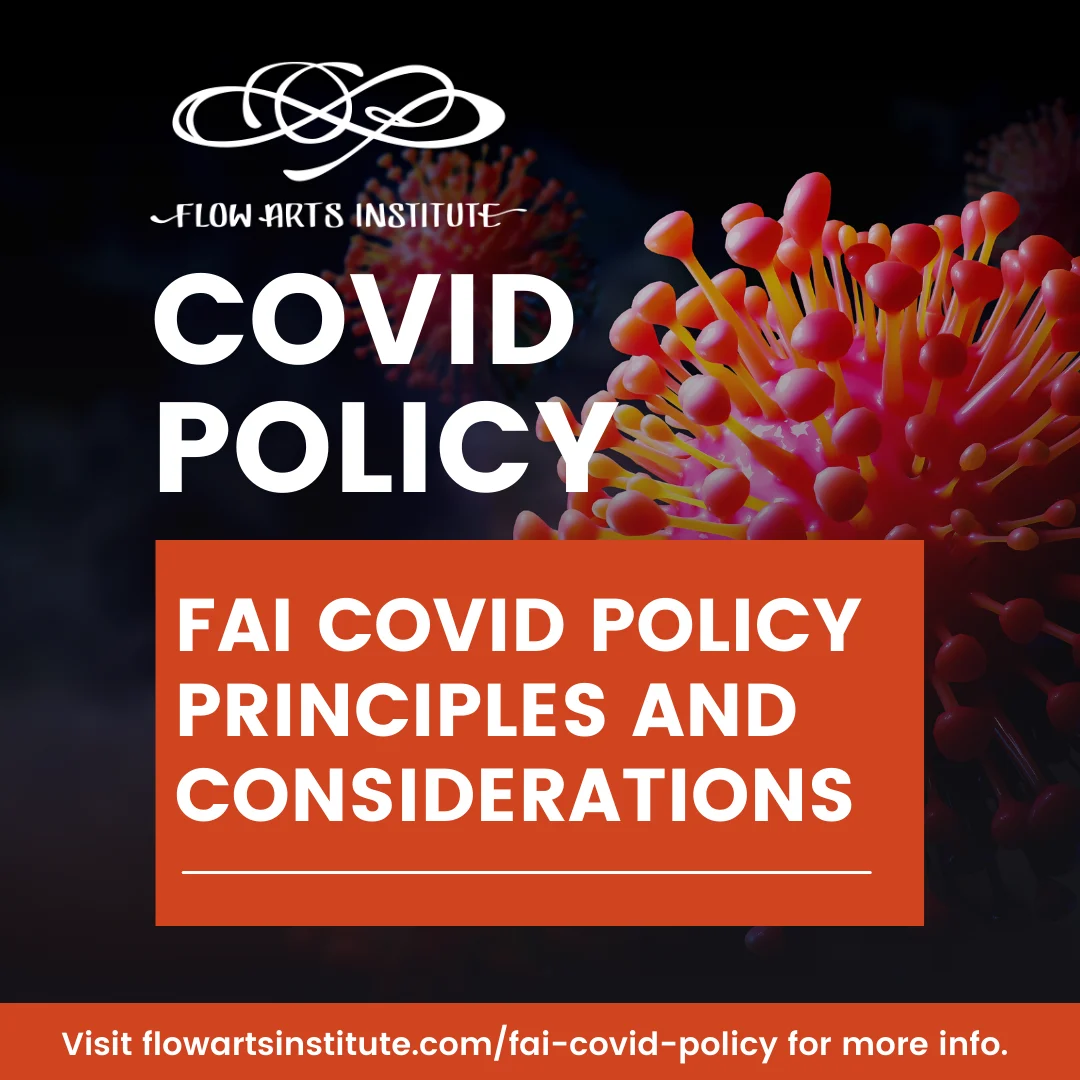
The Flow Arts Institute (FAI), a leading organization dedicated to the growth and safety of the fire and flow arts community, has officially released its Annotated COVID-19 Policy, marking a significant shift in how specialized performance events navigate the tail end of the pandemic. This document serves as a foundational framework for event organizers, performers, and attendees, moving beyond a simple list of mandates to provide a philosophy-driven approach to public health. By emphasizing the "why" behind their recommendations, the FAI aims to foster a culture of transparency and mutual responsibility. The policy, dated February 2022, arrives at a critical juncture for the performing arts sector, as organizers balance the desire for in-person community building with the evolving realities of global health.
Core Principles and the Philosophy of Public Health
The FAI’s strategy is built upon a multi-layered philosophy that prioritizes the wellbeing of both event participants and the local communities that host these gatherings. Unlike standard corporate policies, the FAI’s approach is deeply rooted in the specific needs of the flow arts community—a group that frequently utilizes fire, LED equipment, and acrobatic movement.
At the heart of the policy is a commitment to science-based decision-making. The institute acknowledges that public health is not a static target but a dynamic field requiring constant monitoring of expert recommendations. A primary concern highlighted in the policy is the preservation of local medical resources. The FAI notes that fire performance carries inherent physical risks; should an accident occur, performers require immediate access to emergency medical services. In regions where local hospitals are already strained by COVID-19 surges, an influx of festival-related injuries could place an "excessive burden" on the locality. Therefore, monitoring local hospitalization rates is not just a COVID-related measure but a fundamental safety protocol for the fire arts at large.
Chronology of Event Management and Policy Evolution
The release of this annotated policy follows a turbulent two-year period for the flow arts and festival industries. To understand the significance of the February 2022 update, it is necessary to examine the timeline of the community’s response to the pandemic:
- Spring 2020: The rapid onset of the pandemic led to the cancellation of major flow arts events, including FireDrums and various regional "burns" and flow retreats. The FAI shifted focus toward digital education and community support.
- 2021: As vaccines became available, limited small-scale gatherings began to emerge. Organizers experimented with "bubble" events and mandatory testing, though the lack of a centralized framework led to inconsistent safety standards across the country.
- Winter 2021-2022: The emergence of the Omicron variant presented a new challenge, characterized by high transmissibility even among vaccinated populations. This necessitated a move away from "absolute prevention" toward "risk mitigation and design."
- February 2022: The FAI released the current Annotated COVID-19 Policy. This version reflects a mature understanding of the virus, focusing on ventilation, community norms, and decentralized decision-making rather than top-down enforcement.
Data-Driven Mitigation and Community Standards
The FAI’s policy aligns with broader public health data observed during early 2022. During this period, the Centers for Disease Control and Prevention (CDC) began transitioning their focus from total case counts to "Community Levels," which heavily weighed hospital capacity and severe disease outcomes. By incorporating local hospitalization rates into their gate requirements, the FAI adopted a metric that directly reflects the community’s ability to handle the "inherent risk" of fire performance.
Furthermore, the policy references "minimum gate requirements," a standard that had become a consensus best practice in the event industry by 2022. These requirements often include proof of vaccination or negative test results, which data suggests significantly reduce the likelihood of "superspreader" events in outdoor or well-ventilated settings. By standardizing these expectations, the FAI provides a "moving target" framework that can evolve as new variants or health data emerge.
Empowering Local Leadership and Decentralized Governance
A unique aspect of the FAI’s approach is the emphasis on empowering General Managers, Directors, and local organizers. Rather than issuing a one-size-fits-all mandate for every event under its umbrella, the FAI provides a set of minimum standards complemented by a wide array of "community design suggestions."
This decentralized model recognizes that an event held in a rural, open-air campground in the Midwest faces different logistical challenges and public health risks than a workshop held in a dense urban studio. By providing the "why" behind the rules, the FAI enables organizers to advocate effectively for their specific attendees. This empowerment is intended to facilitate "buy-in" from participants, as they are more likely to follow protocols that are clearly explained and tailored to their specific environment.
Designing for Positive Outcomes: The Architecture of Safety
Perhaps the most innovative portion of the policy is the shift from "creating rules" to "designing for outcomes." This architectural approach to safety focuses on the physical and temporal layout of events to naturally encourage healthy behaviors. Key strategies include:
- Ventilation and Outdoor Focus: Prioritizing activities in areas with ample airflow to minimize the concentration of airborne particles.
- Congestion Management: Analyzing how lines form at registration, food vendors, and workshops. By adjusting sightlines for showcases and spreading out high-traffic activities, organizers can prevent the "clustering" that facilitates viral transmission.
- Spatial Awareness: Encouraging flow arts activities that inherently require space (such as long-staff or large hoop manipulation) to reinforce social distancing through the nature of the art form itself.
- Communication over Oversight: Using reminders, outreach, and community norms to guide behavior rather than relying on a "compliance force" to monitor attendees.
Establishing Community Norms and Mutual Respect
The FAI posits that "mutual respect, knowledge, and building trust" are more effective than any rigid ruleset. The flow arts community is built on the pillars of self-improvement, witnessing the growth of others, and finding inspiration in shared success. The policy suggests that these values are incompatible with a culture of strict policing. Instead, the FAI advocates for a "social contract" where participants agree to take care of one another as a condition of entry.
This approach relies on transparency. By being open about intentions and the scientific data supporting the policy, the FAI hopes to earn the community’s trust. The goal is to move from a state of "compliance" to a state of "communal care," where attendees wear masks in crowded indoor spaces or stay home when feeling unwell out of a sense of duty to their peers rather than fear of expulsion.
Implications for the Future of Performance Arts
The release of the Annotated COVID-19 Policy has implications that extend far beyond the niche of fire spinning and juggling. It serves as a case study for how small, specialized subcultures can navigate global crises without losing their identity.
Analysis of Broader Impact
The FAI’s emphasis on "hospital capacity" as a factor for fire-related events highlights a critical intersection between specialized hobbies and public infrastructure. As climate change increases the frequency of wildfires and other emergencies, the "burden on locality" argument may become a permanent fixture in event planning, regardless of the status of the pandemic.
Furthermore, the "design for outcomes" philosophy represents a sophisticated evolution in crowd management. By using the psychology of movement and space to ensure safety, organizers can create more fluid, enjoyable experiences that feel less restrictive while remaining health-conscious.
Constructive Growth and the Feedback Loop
The FAI concludes its policy by acknowledging that the document is a "work in progress." By inviting constructive feedback from the community, the institute ensures that its policies remain grounded in the lived experiences of its members. This iterative process is essential for maintaining relevance in a rapidly changing public health landscape.
As the flow arts community continues to gather in 2022 and beyond, the FAI’s annotated policy provides more than just a safety guide; it provides a roadmap for resilience. By centering science, empowering local leaders, and designing for the common good, the Flow Arts Institute is attempting to ensure that the "fire" of their community continues to burn brightly, safely, and sustainably.
The full PDF of the Annotated COVID-19 Policy remains available on the Flow Arts Institute’s official website, serving as a transparent record of the organization’s commitment to its members and the public at large. Through these efforts, the FAI reinforces the idea that the success of a community is measured not just by the skills its members acquire, but by the care they show for one another in times of uncertainty.